Review TTArtisan AF 23 mm F1.8 lens
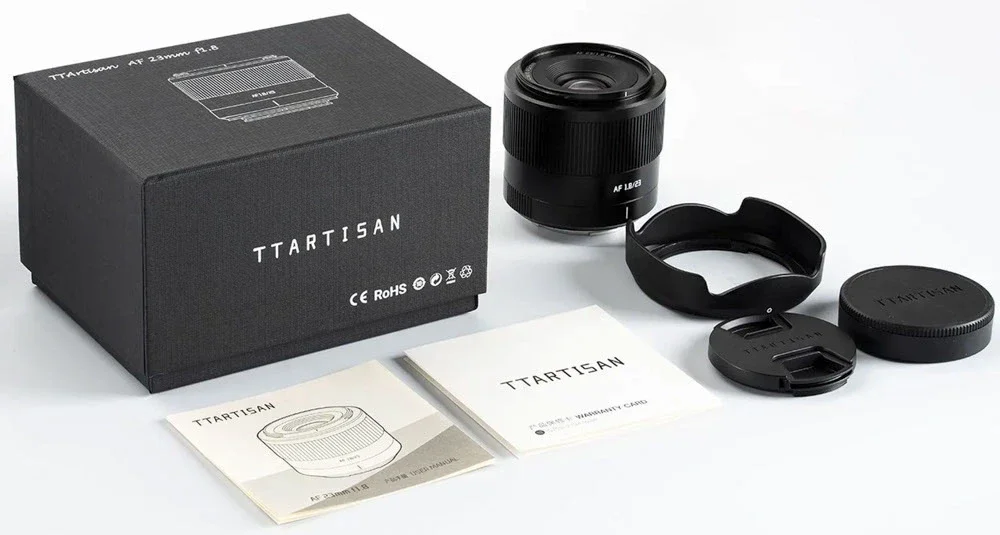
My experience with a surprisingly affordable prime lens.
Before I begin, I would like to express my gratitude to the nice people at Movidis for sending me this lens. As one of their ambassadors, I greatly appreciate their continued support and collaboration. That being said, their involvement has no influence whatsoever on my review – it is based entirely on my personal experience with this lens.
23mm, or 35mm in full-frame equivalent, is one of my favorite focal lengths for street photography. I was therefore incredibly happy when Movidis contacted me and told me about this lens.
When I put the TTArtisan AF 23mm F1.8 on my Fujifilm X-T3, I was thinking mainly about one thing: what do you really get for this price of 165 euros? Not so long ago, a fast, autonomous 23mm prime without major compromises was something found only in more expensive segments. This lens, however, brings that idea within reach. After shooting a few times, I have formed a solid picture that I would like to share.
First impression and build quality
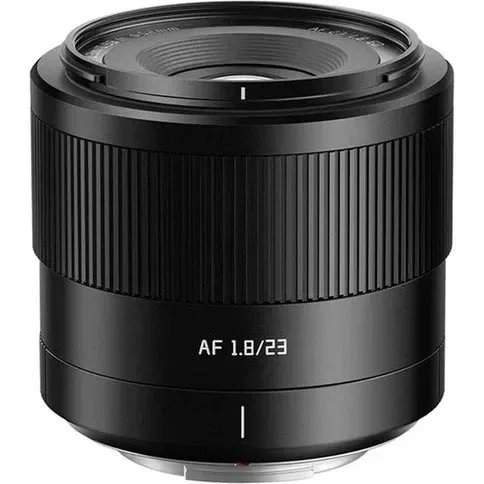
The lens feels surprisingly sturdy yet light (210 grams) in the hand. The metal (aluminum) housing inspires confidence and makes it ideal for lugging around all day without getting tired — exactly what I look for in a lens for street photography. It isn't large, yet it doesn't feel like a toy, which is a compliment considering the price.
Like all TTArtisan autofocus lenses, the rear lens cap serves as a dock for future firmware updates. Furthermore, it is important to know that this lens offers no form of weather and dust resistance. However, I walked through a light rain shower a few times and the lens didn't seem bothered by it. Do not do this during a heavy downpour, though. Given the price, I find this acceptable.
My only real downside is the lack of an aperture ring. As a Fujifilm user, I always like to adjust the aperture on the lens. But the lightweight design and above-average image quality more than compensate for that. Traveling light is always a priority for me when I hit the road. And the reason is simple: I’m not as young as I used to be. Carrying around heavier lenses for long periods isn’t my thing anymore.
Image quality: characterful, but not clinically perfect
What strikes me when shooting with this 23mm is that center sharpness is already usable and quite good starting from f/1.8 — exactly what technical reviewers also confirm. The image has character: not clinically sterile, but organic and lively.
The corners, on the other hand, remain somewhat softer — especially when the aperture is wide open. You also see some ‘smearing’ in the corners. As if the pixels are being smeared. The edges only really become good when you go to f/4 or f/5.6. For the photography I would use this lens for, edge detail isn't that important, so this rarely bothers me.
Many photographers actually praise the bokeh and color reproduction for this price category. Not hyper-creamy, but with a pleasant separation of subject and background. Particularly interesting for portraits.

Autofocus: surprisingly good, but there are limits
I consider this an important aspect of a lens's overall performance. Fortunately, there were few issues in that regard. The lens performs well and is fast enough. The autofocus works remarkably quietly and reasonably fast. On my X-T3, it focused in most situations, including moving subjects and casual street shots.
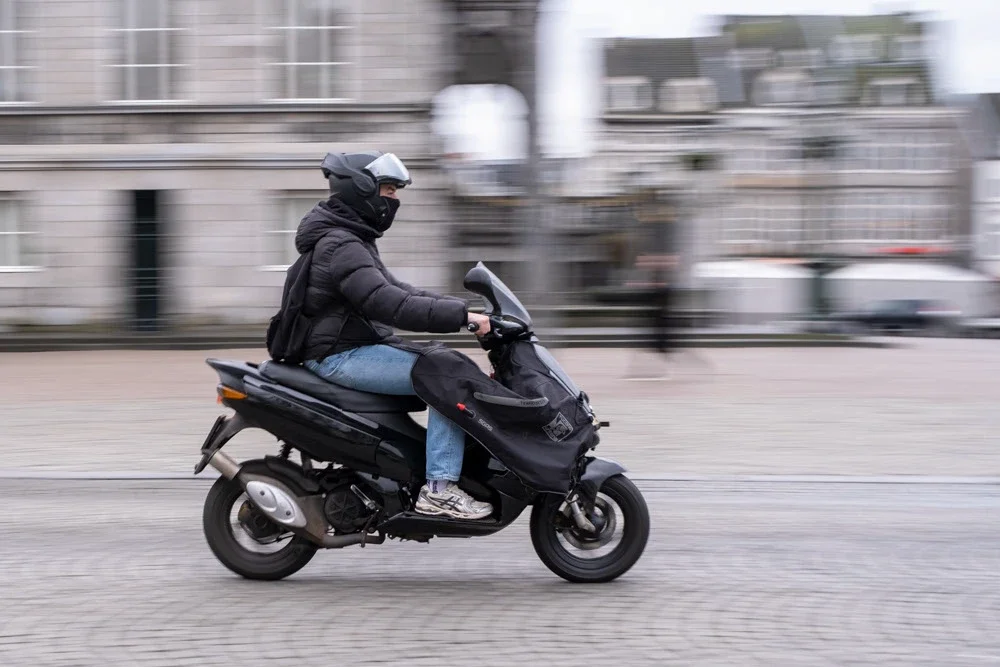
However, there are also some caveats. With a cyclist and scooter coming straight at me, it sometimes lacked just a bit of sharpness. When I held down the shutter button for about 1 second to shoot in Burst mode, this was the result:
Person coming straight at me: All 10 images sharp
Cyclist coming straight at me: 7 out of 10 images sharp
Scooter coming straight at me: 4 out of 10 images sharp
You notice that the AF struggles just a little bit then. Fortunately, there were no problems at all while panning for lateral movements. It is not the fastest AF lens, but simply reasonably average.
Minimum Focusing Distance (MFD)
This lens has a minimum focusing distance of 30 cm. This feels a bit far for a focal length of 35 mm (full-frame equivalent). For comparison: the XF23mm f1.4 has a focusing distance of 20 cm, the XF23mm f2 is 22 cm, and the Sigma 23mm f1.4 is 25 cm. However, it is understandable given that it is a budget lens.
Experiences of other photographers
Online communities show a wide spectrum of experiences. Some users are enthusiastic about how their images look and how this lens ‘performs’ in daily use, almost as if you have a lens that costs more than it does. Others report that the sharpness or autofocus does not always meet their expectations, especially if you look pixel-critically at f/1.8 shots. In my opinion, pixel-peeping offers no added value for most photographers. This diversity of experiences makes one thing clear to me: this lens performs significantly better than the price suggests. However, it does call for realism regarding what to expect — especially compared to premium lenses. So, don't make that comparison. That isn't fair.
Who is this lens intended for?
This is one of the two focal lengths I often recommend to street and beginner photographers. Its versatility ensures thoughtful shooting. This allows you to focus more on the environment and the subject. You can also experiment with different photography styles. This lens is suitable for a wide range of genres, making it an ideal choice for anyone just starting out.

Conclusion: why it does work for me
For me, the TTArtisan AF 23mm F1.8 is a lens that offers a lot of fun and photographic value for relatively little money. It calls for smart usage choices: I enjoy using it for street photography and everyday shots. It challenges me in terms of sharpness and character, and that makes working with light, perspective, and the moment fun.
It absolutely does not replace top-class lenses if you are looking for maximum technical performance. For that, you clearly need to invest more — but it brings a creative and accessible lens experience to visual storytelling that I enjoy using on my X-T3. Notes
The lens I received is a so-called sample lens. This usually refers to a pre-production or review unit that was sent to media, retailers, or influencers, for example, before the lens was officially launched. Sometimes such samples are identical to the final production. However, at other times they may have minor variations in finish, firmware, or autofocus calibration.
The photos have only been cropped slightly. Otherwise, no editing whatsoever.