
My Lighting gear
For me, lighting is less about adding light and more about shaping the way a story feels. It allows me to create atmosphere, guide the viewer’s attention and give depth and emotion to the moments I photograph.
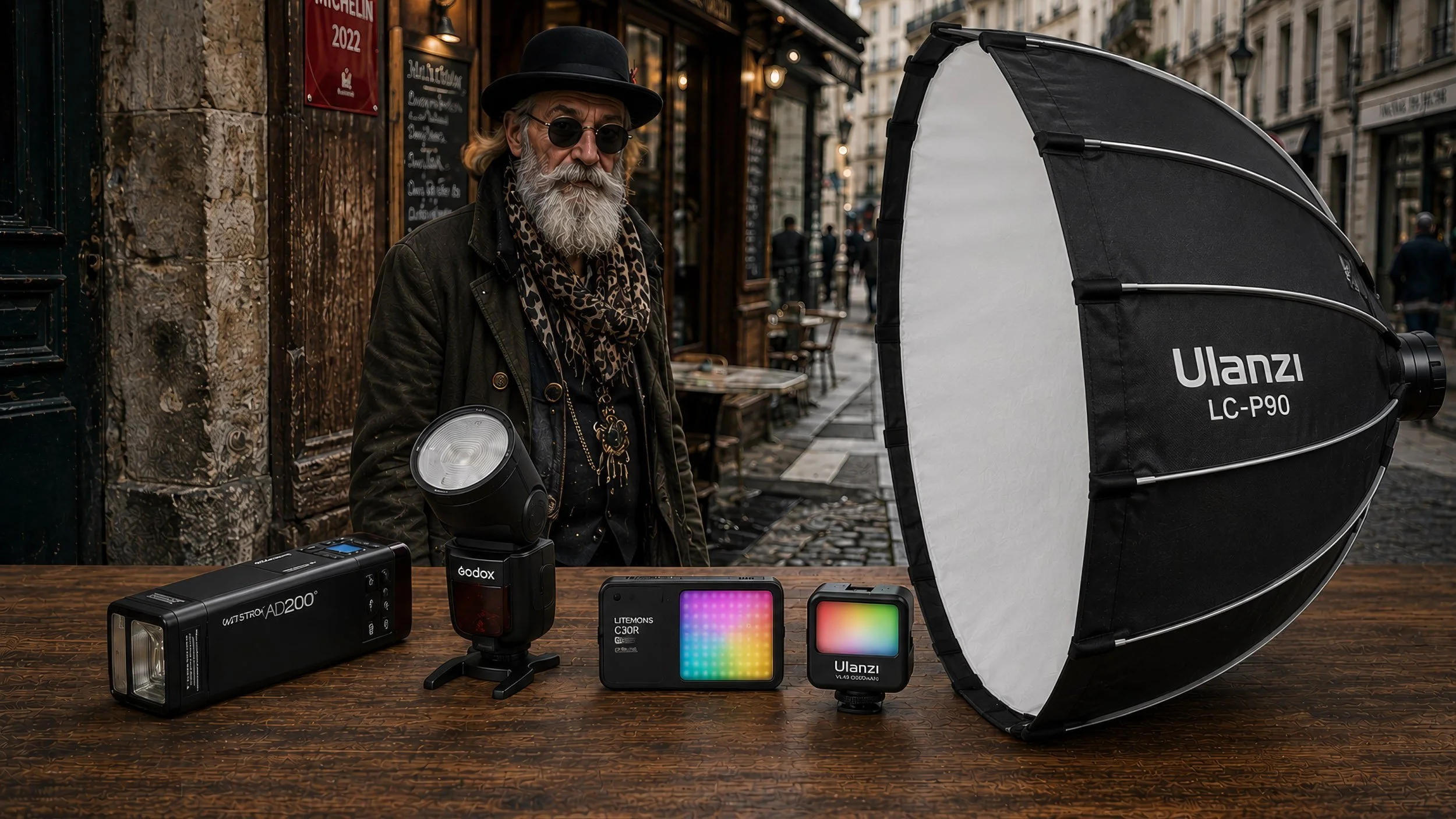
I regularly get asked questions about my photography gear. That is the reason I’ve compiled a list of my photography lighting kit. I don’t usually emphasize the gear aspect of my photography, but I hope this is helpful to someone. I am not sponsored. All my gear was acquired with my own funds.
Light can reveal a face, separate a subject from its surroundings, create atmosphere or completely transform an ordinary location.
That is why I enjoy working with Godox and Ulanzi. The brands deliver a good balance between quality and affordability. Godox gives me the power, speed and reliability I need when working with flash. While Ulanzi offers compact and flexible lighting equipment that encourages me to experiment more freely. Both systems allow me to work intuitively, whether I need subtle fill light, want to balance existing ambient light or deliberately create a more dramatic look.
What matters most is that the equipment never becomes the starting point. I first decide what I want the light to say — and then choose the tool that helps me create it.
Flash and Continuous light
It all begins with an idea. Maybe you want to launch a business. Maybe you want to turn a hobby into something more. Or maybe you have a creative project to share with the world. Whatever it is, the way you tell your story online can make all the difference.
Godox Witstro AD200
For location photography, I want lighting equipment that gives me creative control without adding unnecessary weight to my setup. The Godox WITSTRO AD200 offers an excellent balance between portability and power, making it a versatile companion for portraits, corporate assignments and creative photography.
Its compact design makes it easy to carry and position, while providing considerably more lighting power than a conventional speedlight. I particularly appreciate the flexibility to shape the light with different modifiers, allowing me to move from subtle fill light to a more dramatic and directional look.
The wireless Godox system also allows me to work quickly and control the flash remotely from my camera. For me, the Godox AD200 is not simply about adding light — it is a creative tool that allows me to shape atmosphere, emphasise my subject and give an image exactly the feeling I am looking for.
GODOX DUO HEAD AD200
Sometimes one AD200 is enough, and sometimes I simply need more light. The Godox AD-B2 Dual Power Flash Bracket, often referred to as the Duo Head, allows me to combine two Godox AD200 units into one more powerful light source.
With two flash units installed, I have up to approximately 400Ws of flash power available. This is particularly useful when I need to overpower bright ambient light, illuminate a larger subject or use a softbox while still having enough output.
Another advantage is flexibility. I can use one AD200 when portability is most important and combine two when I need additional power. The bracket also provides a Bowens-style mount, giving me access to a wide range of softboxes and other light modifiers.
Godox X Pro-C/F transmitter
I work with both Canon and Fujifilm cameras, so I use the corresponding versions of the Godox XPro Wireless Flash Controller. This allows me to control the same Godox lighting equipment regardless of which camera system I choose for a shoot.
From the controller on my camera, I can remotely adjust flash groups, power levels and other settings without having to walk over to each individual flash. That becomes particularly useful when lights are positioned high, inside a softbox or some distance away from me.
The large display and direct controls make it easy to see and change my lighting setup while I am working. With compatible Godox equipment, I can also use functions such as TTL and High-Speed Sync, depending on the camera and flash combination.
For me, the biggest advantage is consistency: different camera systems, but the same familiar way of controlling my off-camera lighting.
Godox V1
For assignments where I need to work quickly and travel light, the Godox V1 gives me a flexible lighting solution in a remarkably compact form. Its distinctive round flash head produces a natural and even spread of light, making it equally useful for portraits, events and documentary-style assignments.
I particularly appreciate the freedom to use it directly on the camera or as part of an off-camera lighting setup. Combined with the Godox wireless system, I can quickly adjust and control the light while concentrating on the subject and the moment in front of me.
Its rechargeable battery and practical magnetic modifier system make the V1 especially convenient when working on location. For me, the Godox V1 is more than a speedlight — it is a compact creative tool that allows me to shape light quickly, intuitively and with purpose.
Phottix Nuada R4 II 70W LED
For portraits and location photography, the Phottix Nuada R4 II 70W LED Light gives me the freedom to shape the atmosphere while seeing the effect of the light before I take the photograph. Its large round LED panel produces a beautifully soft and flattering light, making it particularly useful when I want a natural and subtle result.
The adjustable brightness and colour temperature allow me to balance the light with the existing ambient conditions rather than overpowering them. I particularly appreciate this flexibility when working in interiors or on location, where the character of the available light often plays an important part in the final image.
Its continuous light also makes the Nuada R4 II useful for both photography and video. For me, the Phottix Nuada R4 IIis not simply an additional light source — it is a creative tool that helps me shape mood, depth and atmosphere while keeping the light natural and believable.
Savage RGB Light Painter Pro LED
The Savage RGB Light Painter Pro LED is a different kind of lighting tool in my kit. Rather than simply adding more light, I use it when I want to create with light.
Its elongated design and RGB capabilities make it particularly interesting for light painting, creative portraits, product photography and adding coloured accents to a scene. By moving the light during a long exposure, I can create lines, shapes and patterns that would be impossible with conventional flash.
I also like the fact that I can use it as a continuous light source. This allows me to see the effect of colour, direction and intensity before taking the photograph — something that encourages experimentation.
For me, this is not an everyday lighting tool, and that is exactly why I like it. It invites me to experiment, play with colour and use light as part of the image rather than simply as illumination.
Godox Litemons C30R RGB Pocket LED Panel
For situations where I want to add a subtle touch of light or colour, the Godox Litemons C30R RGB Pocket LED Panelgives me a remarkably compact and creative solution. Its small size makes it easy to carry in almost any camera bag, while the RGB capabilities allow me to experiment with colour, atmosphere and visual accents.
I particularly like using it to introduce a hint of colour into portraits, illuminate small details or create separation between a subject and the background. The adjustable brightness and colour settings make it easy to balance the C30R with the existing light rather than allowing it to dominate the scene.
Its continuous light also lets me see exactly how the colour and shadows will influence the photograph before pressing the shutter. For me, the Godox Litemons C30R is a small but surprisingly versatile creative tool — perfect for those moments when a little extra light or colour can completely change the mood of an image.
Ulanzi VL49 Pro Rechargeable Mini RGB
For situations where I only need a subtle amount of additional light, the Ulanzi VL49 Pro Rechargeable Mini RGB is a compact and versatile tool that easily fits into my camera bag. Despite its small size, it gives me plenty of creative freedom to add colour, atmosphere or a gentle accent to a scene.
The adjustable RGB colours, brightness and colour temperature allow me to blend the light naturally with the surroundings or deliberately create a stronger visual contrast. I particularly like using it for portraits, small details and creative background lighting where a larger light would be unnecessary or difficult to position.
Because it is rechargeable and extremely portable, I can always keep it close at hand when working on location. For me, the Ulanzi VL49 Pro proves that creative lighting does not have to be large or complicated — sometimes a small touch of carefully placed light is all an image needs.
Light modifiers
For me, choosing a lens is not simply about focal length or technical perfection — it is about choosing how I want to see the world. That is why I enjoy combining my Fujifilm cameras with lenses from Fujinon, Thypoch and TTArtisan, each bringing its own character to my photography.
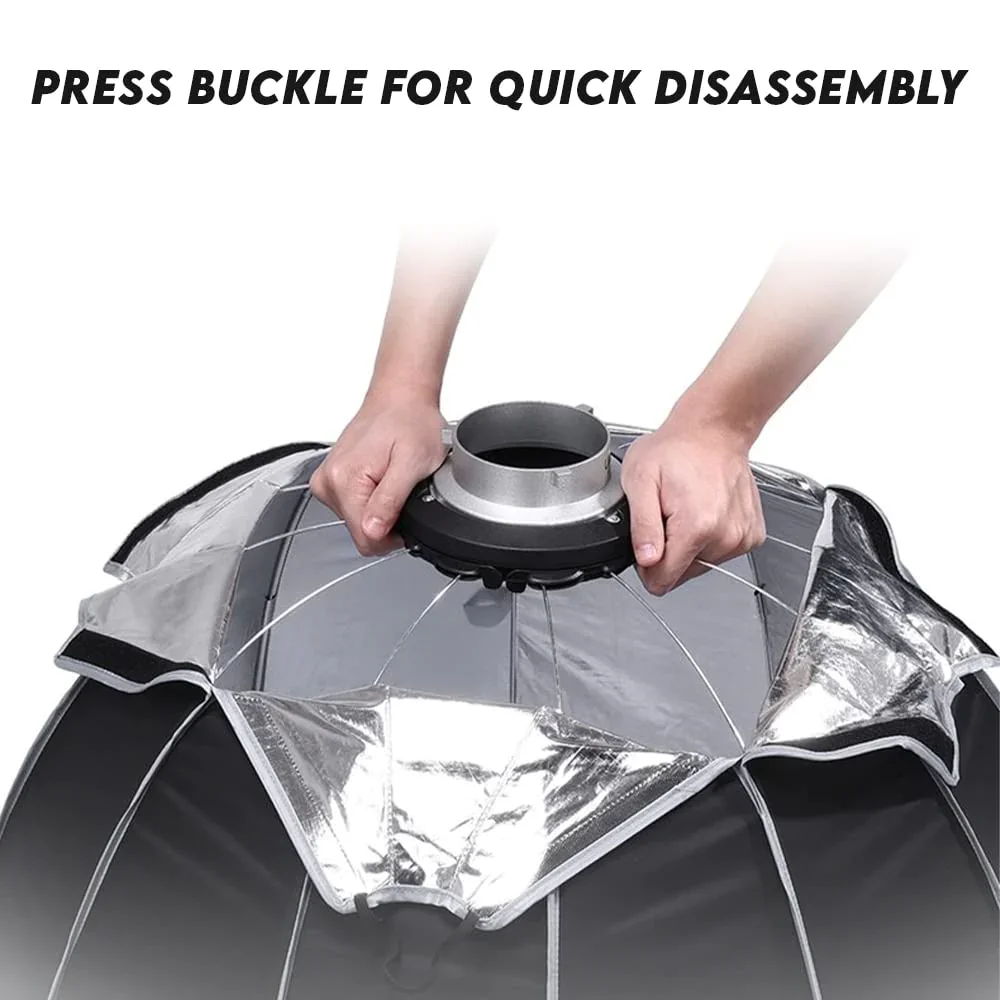
Softbox Ulanzi LC-P90 90cm Quick Portable
For portraits and location photography, the Ulanzi LC-P90 90cm Quick Portable Softbox allows me to transform a relatively small light source into beautifully soft and controlled illumination. Its 90cm size creates a broad, flattering light that works particularly well when I want natural-looking portraits with gentle transitions between highlights and shadows.
The quick-opening design makes it especially practical on location, where I want to spend more time photographing and less time assembling equipment. Combined with a compatible light, it gives me the freedom to soften, direct and shape the illumination according to the subject and atmosphere of the scene.
Despite its generous size, the LC-P90 remains portable enough to become part of my location lighting kit. For me, the Ulanzi LC-P90 is not simply a light modifier — it is a creative tool that helps turn artificial light into something softer, more natural and more expressive.
WESTCOTT 26” RAPID OCTBOX
When I want more control over my light without carrying a large modifier, the Westcott 26” Rapid Octabox is a very practical choice. Its compact size makes it particularly useful on location or in situations where I need to work quickly in a limited space.
The octagonal shape produces a soft but more directional light than a large umbrella, giving me greater control over where the light falls. I especially like it for portraits, detail shots and situations where I want to add a subtle, controlled light rather than illuminate the entire scene.
Its rapid setup is another important advantage. I can have it ready within moments, which makes a real difference when working on location.
For me, the 26” Rapid Octabox is about portability, speed and control — a small modifier that gives me plenty of creative possibilities without adding unnecessary bulk to my lighting kit.
WESTCOTT APOLLO MEDIUM SOFTBOX
The Westcott Apollo Medium Softbox is one of those light modifiers I use when I want soft, controlled light without a complicated setup. Its relatively large surface creates a flattering quality of light that works particularly well for portraits.
What I like about the Apollo design is its simplicity. It opens much like an umbrella, so I can set it up quickly without having to assemble separate rods or speed rings. The flash is positioned inside the softbox and fires towards the reflective interior, creating an even and diffused light before it reaches my subject.
Compared with an umbrella, the enclosed design gives me more control over where the light falls and helps reduce unwanted spill onto the background or surrounding area.
For me, the Apollo Medium offers a very useful balance: beautiful soft light, more control than an umbrella and a setup that remains practical enough to use on location.
GODOX ACCESSOIRES KIT AK-R1
Small accessories can make a surprisingly big difference to the way I use flash. The Godox AK-R1 Accessory Kit gives me a collection of compact magnetic light modifiers that I can quickly attach, remove and combine depending on the effect I want to create.
The kit includes tools for softening, shaping, directing and colouring the light. I can narrow the beam, reduce unwanted spill, bounce the flash or add colour without having to carry larger lighting modifiers.
What I particularly like is the magnetic mounting system. Changing from one modifier to another takes only seconds, which makes experimenting with different lighting effects much easier during a shoot.
For me, the AK-R1 is a small kit with a lot of possibilities: more control over my flash, more creative options and hardly any extra space needed in my camera bag.
WESTCOTT 60” + 43” UMBRELLA
Sometimes the simplest lighting tools are also the most effective. My Westcott Umbrellas gives me a large light source that produces beautifully soft and natural-looking light without requiring a complicated setup.
The generous 60-inch size is especially useful for portraits and small groups, where I want the light to spread evenly across a larger area. Positioned close to my subject, it creates soft transitions between highlights and shadows and a very flattering quality of light.
What I particularly like about an umbrella is its speed. I can open it, position my flash and be ready to photograph within moments. After the shoot, it folds down just as quickly.
For me, its strength lies in that simplicity: a large, soft light source that is quick to set up, easy to use and consistently delivers beautiful light.
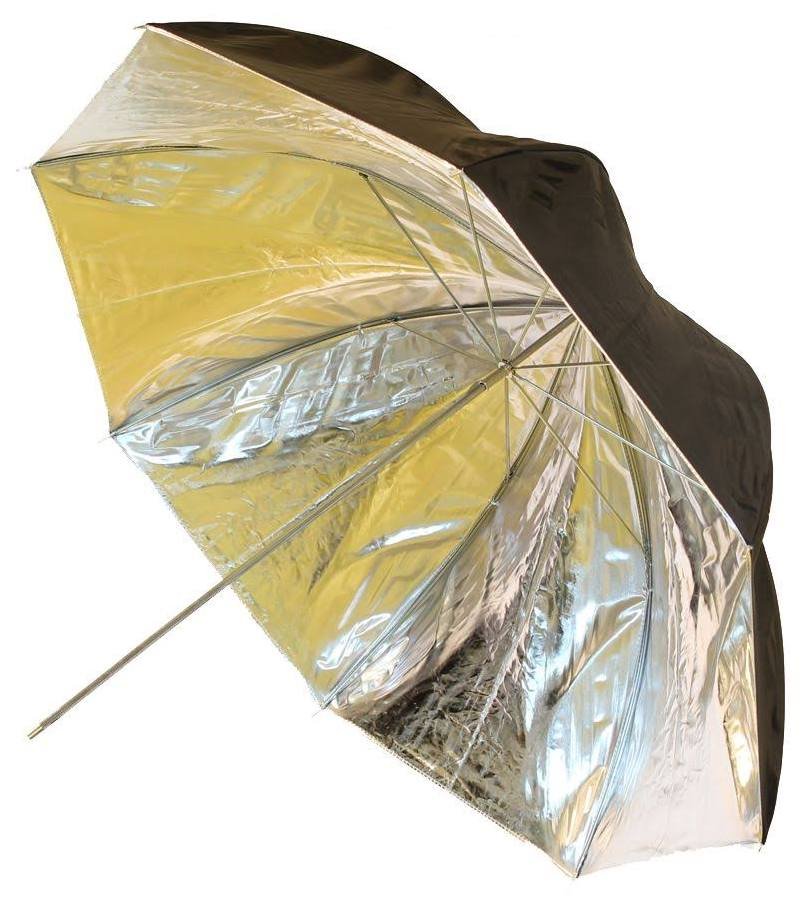
FALCON EYES SILVER UMBRELLA
When I want a little more contrast and punch than I get from a white umbrella, I use my Falcon Eyes Silver / Black Umbrella. The silver interior reflects the flash efficiently and produces a brighter, more directional light with stronger highlights and more contrast.
The black exterior helps prevent light from passing through the umbrella, keeping more of the flash directed towards my subject. This gives me better control over the light and makes it useful for portraits and other situations where I want a more defined look.
Like any umbrella, one of its biggest advantages is simplicity. It takes only seconds to set up, weighs very little and is easy to take with me on location.
I often choose it when I want something between bare flash and the softer character of a large white umbrella: quick to use, efficient with flash power and capable of producing light with a little more character and contrast.
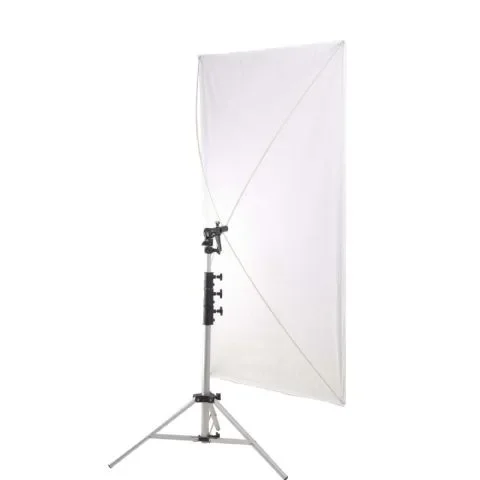
FALCON EYES REFLECTOR RR-5684SL
Not every photograph needs an extra flash or LED light. Sometimes all I need is a simple way to redirect the light that is already there. That is where the Falcon Eyes RR-5684SL Reflector comes in.
I mainly use it for portraits and location photography to brighten shadows, add a little more light to a face or create better balance between my subject and the available light. By choosing a different reflective surface, I can also influence the character and warmth of the reflected light.
Because it folds down to a compact size, it is easy to take with me and requires no batteries, cables or additional lighting equipment.
For me, a reflector remains one of the simplest and most effective lighting tools: lightweight, quick to use and often all that is needed to turn good available light into better light.
Backgrounds
A background is more than simply what appears behind the subject. It can influence the mood, colour, contrast and overall character of a photograph — and sometimes determine whether an image feels clean and controlled or more natural and atmospheric.
Depending on what I am photographing, I use different types of backgrounds. A neutral black or white background works well when I want all attention on the subject, while coloured backgrounds offer more creative possibilities. Fabric backgrounds give me a softer, more organic look, particularly for portraits.
I also like backgrounds that are easy to take on location. Being able to create a small, controlled shooting environment almost anywhere gives me much more flexibility.
For me, choosing a background is therefore part of the photographic process: it doesn’t just fill the space behind my subject — it helps define the image.
BRESSER TR-3 BACKGROUND
A good background can completely change the character of a photograph. I use two Bresser TR-3 collapsible backgrounds: a green/blue version and a black/white version, giving me four different backgrounds in a compact and portable setup.
The black and white sides are particularly useful for portraits, product photography and clean, neutral images. The green and blue backgrounds give me additional creative possibilities, including chroma key work when I want to replace the background digitally afterwards.
What I like most is their simplicity. I can quickly unfold a background, position it behind my subject and start shooting without having to set up a complete background system. Afterwards, they fold down again for easy transport and storage.
For me, they are a practical solution for both studio and location work: four very different looks, quick to set up and compact enough to take wherever I need them.
SAVAGE MUSLIN BACKGROUND
When I want a more classic and natural-looking background, I use my Savage Muslin Background. The fabric creates a softer and less clinical look than a completely smooth paper or collapsible background, which makes it particularly suitable for portraits.
Because it is a large fabric backdrop, I have more freedom in positioning my subject and creating anything from a tight portrait to a wider composition. By changing the distance between subject, background and lighting, I can also make the backdrop appear lighter, darker or more textured.
I particularly like the fact that muslin does not have to look perfectly smooth. A few subtle folds can actually add character and depth to the photograph.
For me, it is a simple but versatile studio tool: a large, reusable background that gives portraits a natural, timeless and slightly more organic feel.
FALCON EYES BACKGROUND SYSTEM
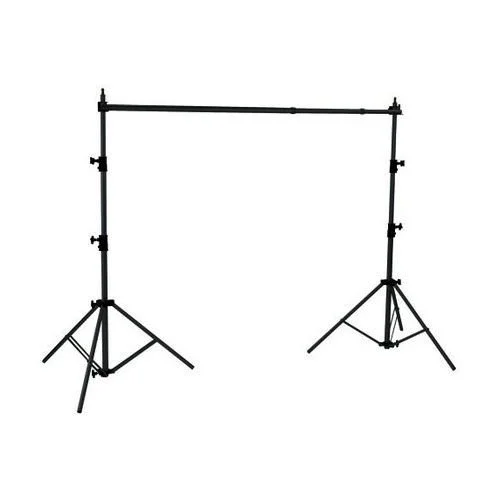
A background cloth is only really useful if I can position it exactly where I need it. My Falcon Eyes Background Systemgives me a simple and flexible way to create a full-size background, both in the studio and on location.
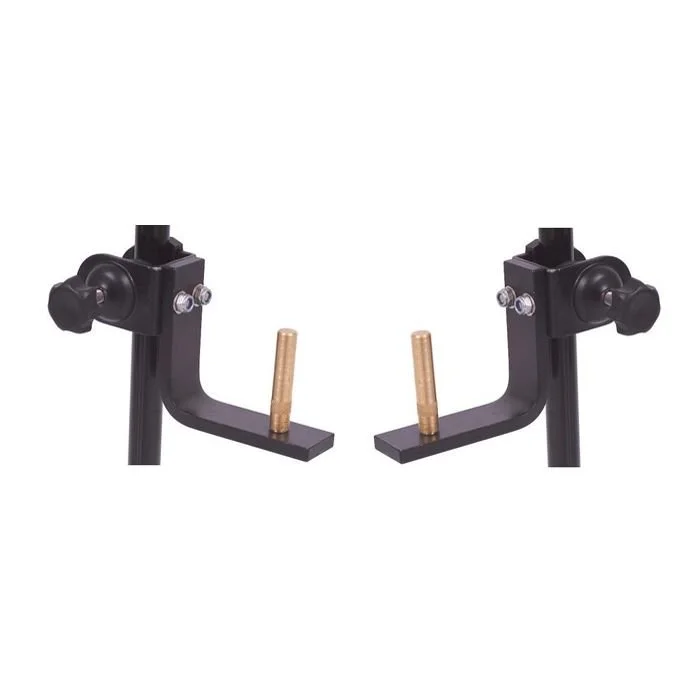
The system consists of two sturdy stands and a telescopic crossbar that can be extended to approximately 3.10 metres. The height of the stands is also adjustable, allowing me to position the background higher or lower depending on the subject, composition and available space.
This combination of adjustable height and width gives me plenty of flexibility for anything from a head-and-shoulders portrait to full-length portraits and small groups. I can also use it with larger background cloths, including my Savage Muslin Background.
I particularly like the fact that the complete system is portable. I can create a temporary portrait setup almost anywhere without needing a permanent studio installation.
For me, it provides exactly what I need from a background support: adjustable height, plenty of width and the freedom to turn an ordinary location into a temporary studio.
Light meters
I particularly use light meters when working with controlled lighting like indoor sports arena or studio work. And carefully prepared shoots where consistent exposure is important. Its clear controls make it easy to translate a light reading into practical aperture and shutter-speed settings.
Kenko KFM-1100
The Kenko KFM-1100 Auto Digi Meter is a reliable handheld light meter that gives me precise control over exposure when I want to work independently of the camera’s built-in metering system. It can measure both ambient and flash light, making it useful for a wide range of photographic situations.
When using flash, it also helps me balance artificial light with the available ambient light more accurately. Although modern cameras have excellent metering systems, a dedicated meter encourages a more deliberate approach to understanding and shaping light.
For me, the Kenko KFM-1100 remains a valuable tool whenever accurate exposure and complete control over light are essential.