
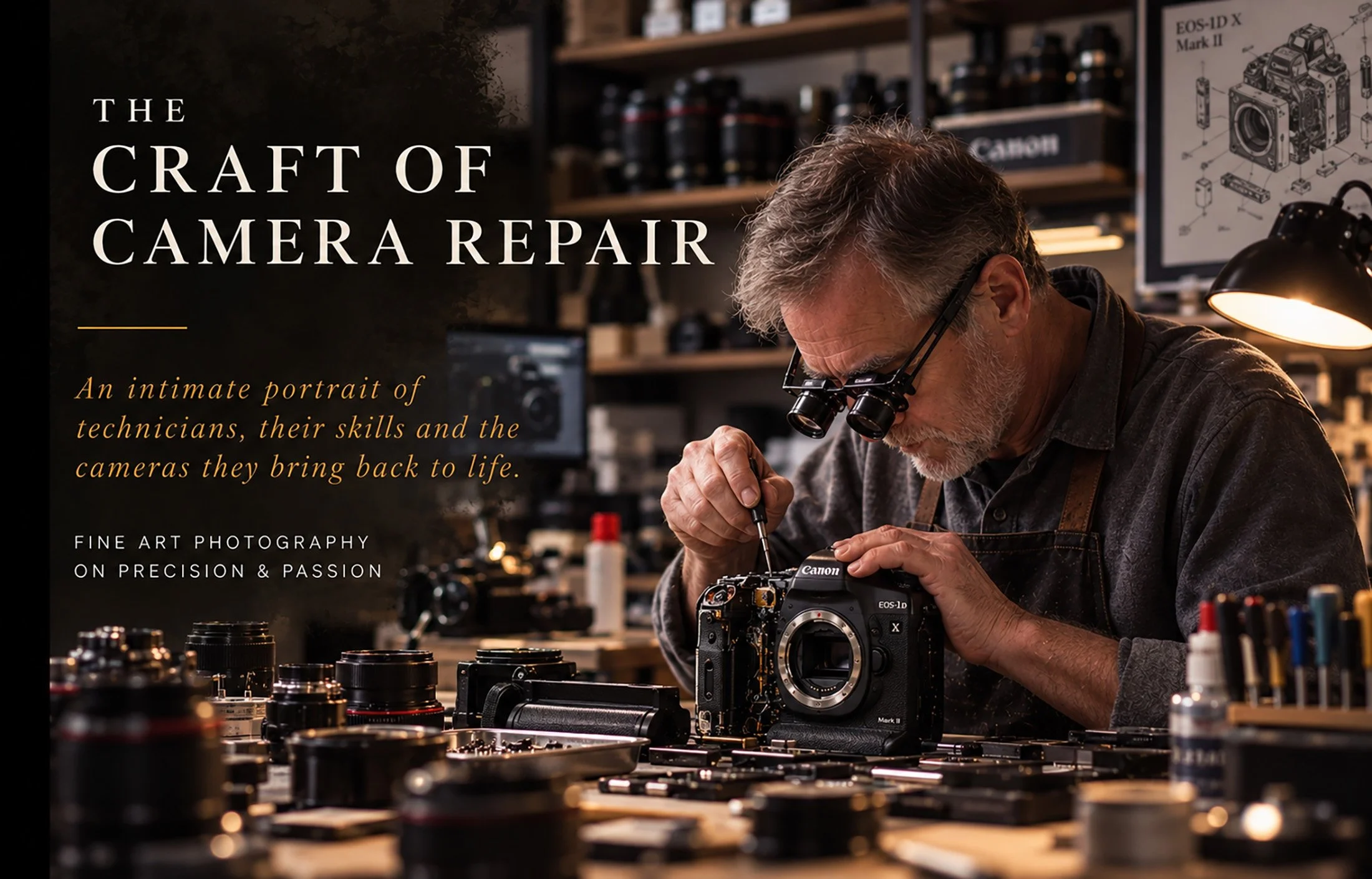
The art of repairing camera’s
Behind every camera and lens lies a remarkable world of precision engineering. We photographers depend on this technology every day, yet we rarely see what happens inside the equipment we hold in our hands. Only when something stops working do we begin to realise how complex these photographic tools truly are.
The craft of Camera Repair takes a closer look at the skilled people who understand that hidden world.
Repairing photographic equipment requires much more than technical knowledge. Cameras and lenses contain delicate mechanical and electronic components that must work together with extraordinary accuracy. A tiny misalignment, damaged connection or worn component can affect the performance of an entire system. Finding the problem requires experience, patience and the ability to understand how hundreds of individual parts interact.
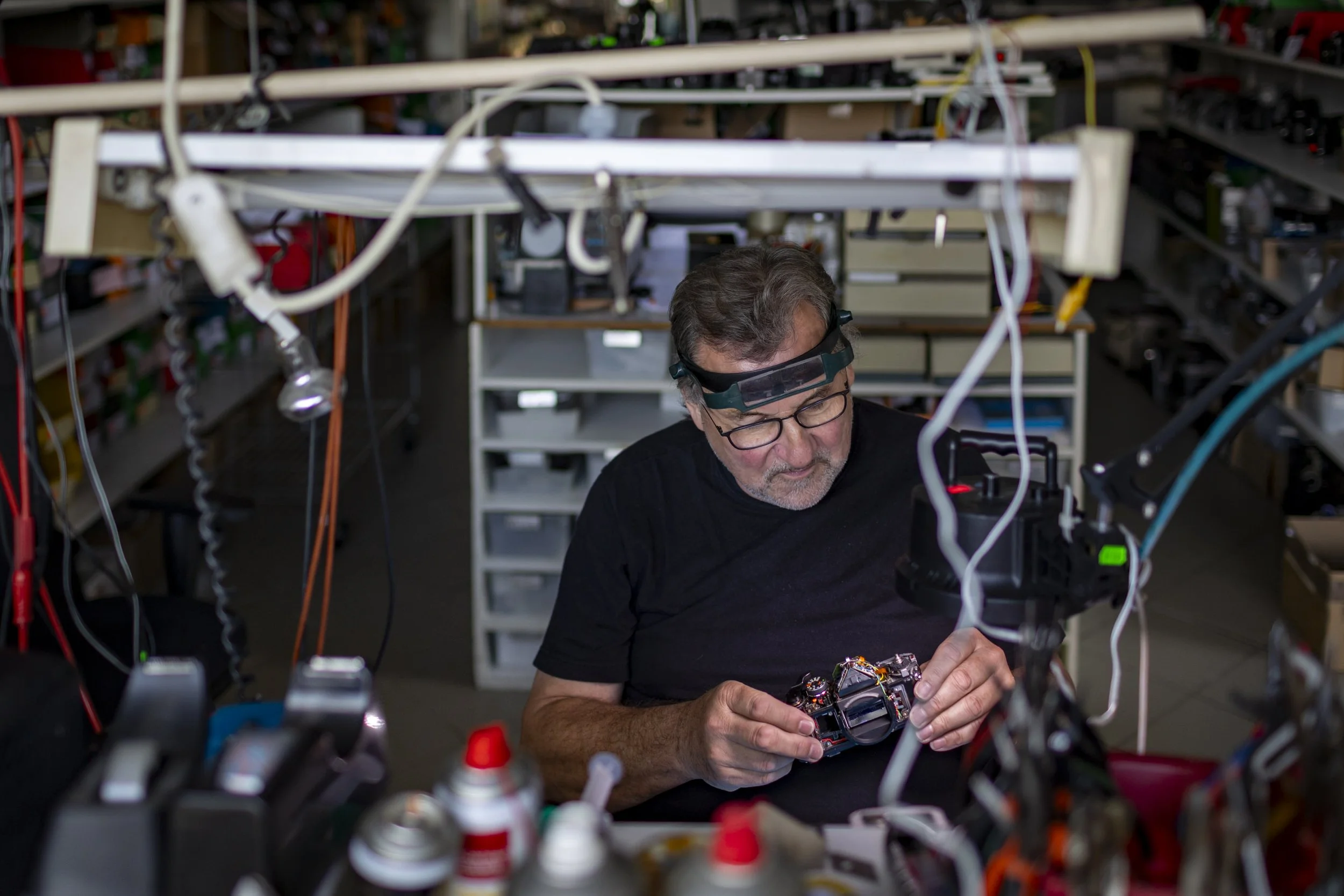
The photographer captures the moment. The craftsman makes sure the camera can capture the next one.
Repairing a camera or lens can extend its working life for many years, preserving equipment that may still have countless photographs left to make.
For me, this is exactly what The Craft of Camera Repair is about: revealing the people behind the equipment we photographers rely on. It is a story of precision, patience, problem-solving and craftsmanship.
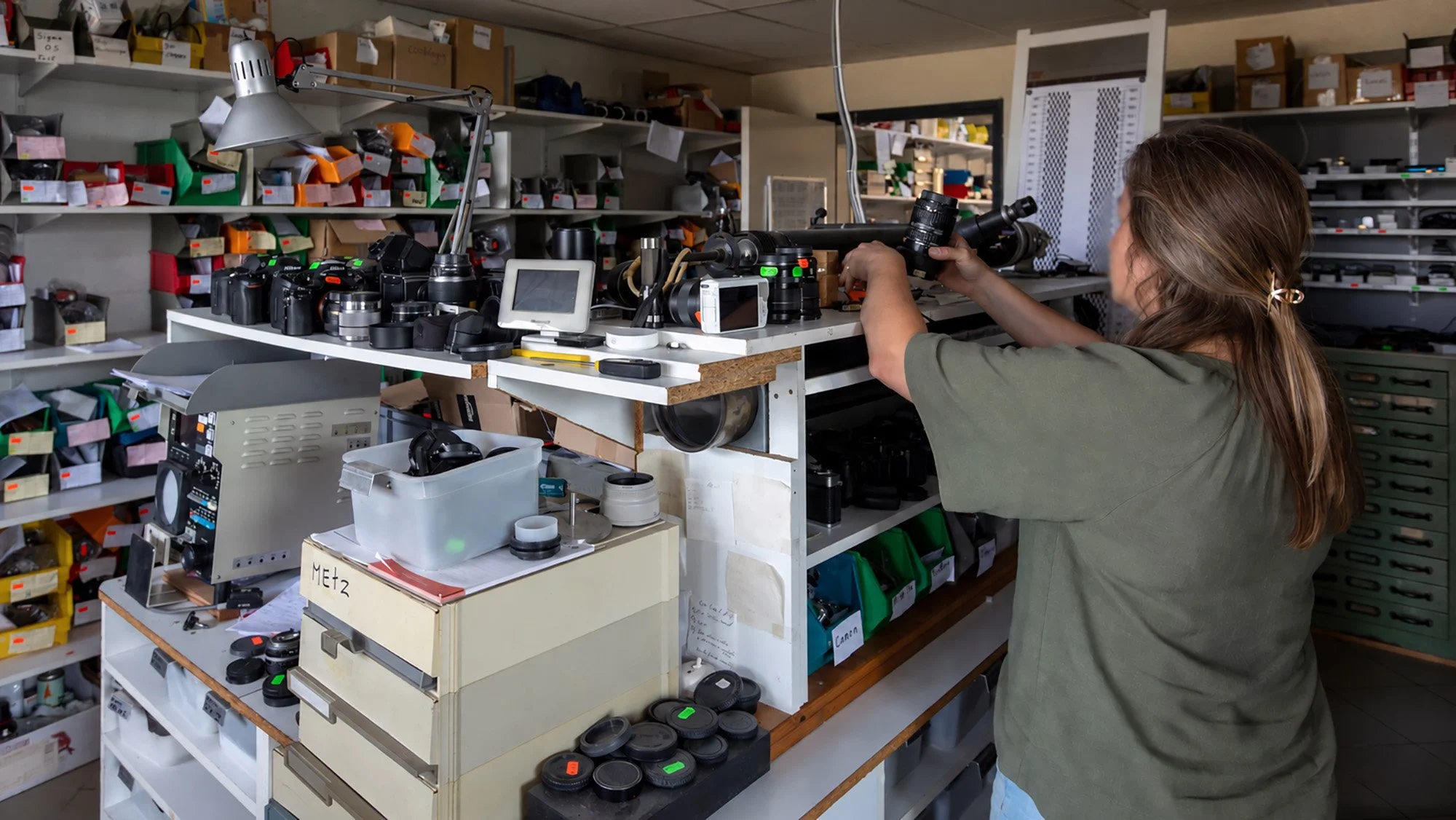
Camera Service Limburg (Schipperskerk)
We know the wonderful people of Camera Service Limburg for a longer time now. Their repair store in Schipperskerk (Born, Limburg) is a fascinating place where craftsmanship, technology and decades of experience come together.
Camera Service Limburg is a remarkable family-run business operated by the Forster family: father, mother, son, daughter, and two colleagues all play their part in keeping the company and its craftsmanship alive. For more than 40 years, the family has been repairing cameras, lenses, video cameras etc. Building an impressive amount of knowledge and experience along the way. Their repair atelier welcomes equipment from a wide range of manufacturers, including Canon, Nikon, Sony and Panasonic, as well as lenses from brands such as Sigma and Tamron.
What immediately fascinated me was the precision behind the work. A modern camera may be an advanced piece of electronics, but repairing one still depends heavily on the knowledge, patience and skilled hands of the person sitting at the workbench. Cameras and lenses are carefully dismantled, inspected and tested, sometimes revealing incredibly small mechanical or electronic components hidden deep inside.
There is also something special about seeing this knowledge being preserved within a family business. After more than four decades, Camera Service Limburg represents more than a repair workshop. It is a place where experience is shared across generations and where technical knowledge continues to evolve alongside the rapidly changing world of photography and video.
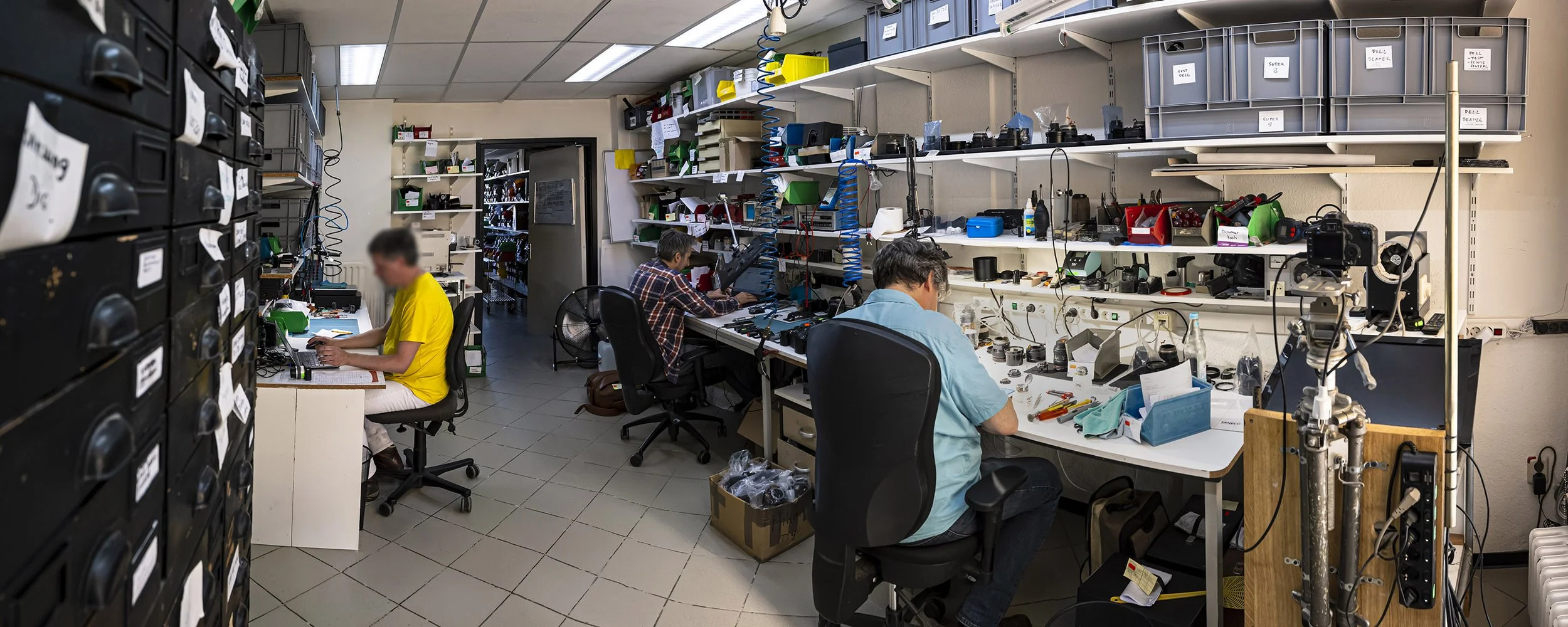
Where Cameras and Lenses come back to life
Inside the workshop of Camera Service Limburg, craftsmanship, experience and technology come together. Surrounded by cameras, lenses, specialized tools and countless spare parts, technicians diagnose, repair and carefully restore photographic equipment.
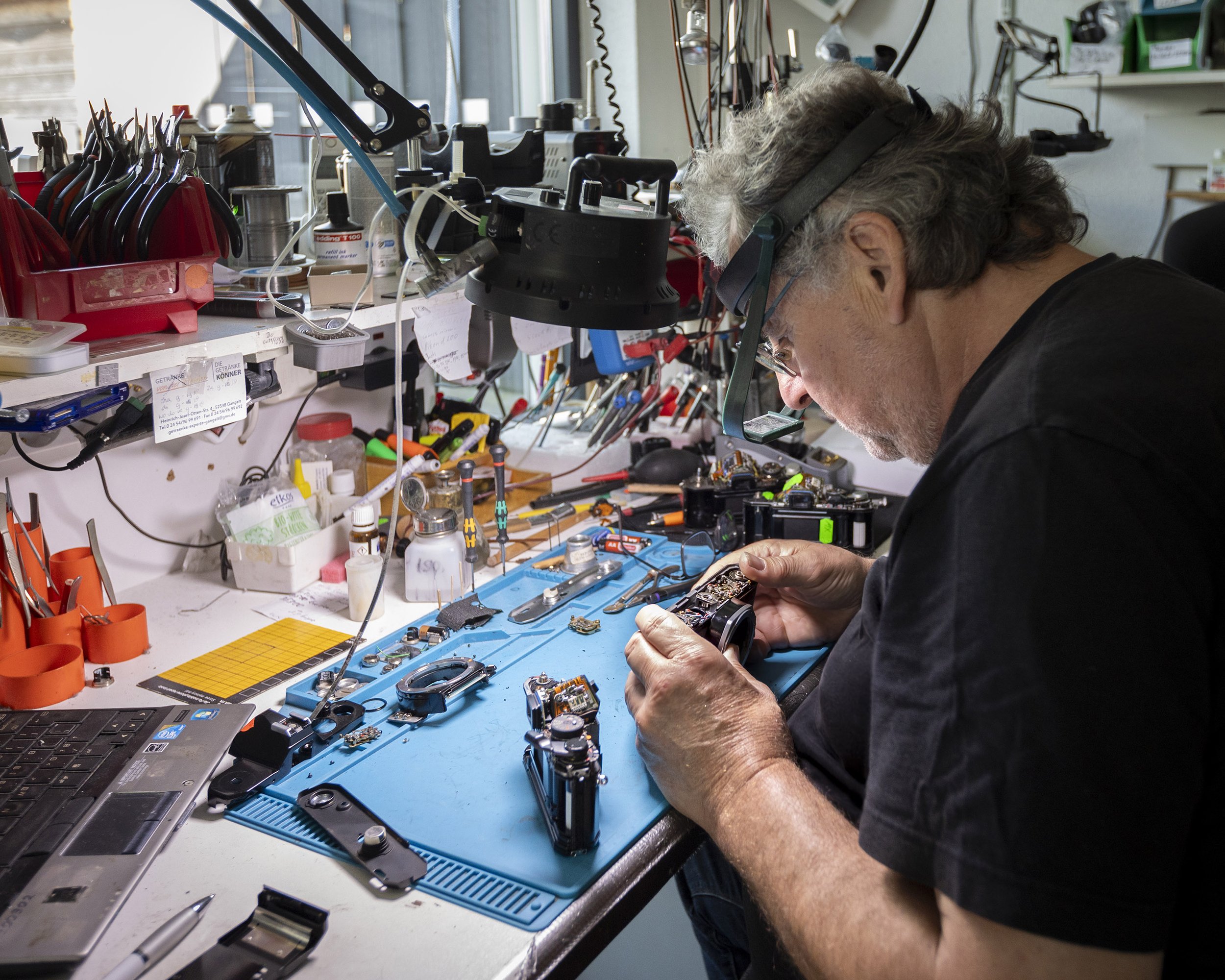
The Art of Finding the Problem
True craftsmanship often begins before anything is repaired. It starts with observation, patience and the ability to understand what is hidden beneath the surface. Surrounded by tools, components and years of accumulated knowledge, the camera technician carefully searches for the source of the problem.
Every screw, contact and mechanical part can provide a clue. Experience guides the hands, but curiosity guides the process. There is no shortcut: diagnosing a fault requires concentration, precision and an intimate understanding of how hundreds of tiny components work together.
This quiet moment of investigation reveals an essential part of craftsmanship — before you can repair something, you first have to understand why it stopped working.
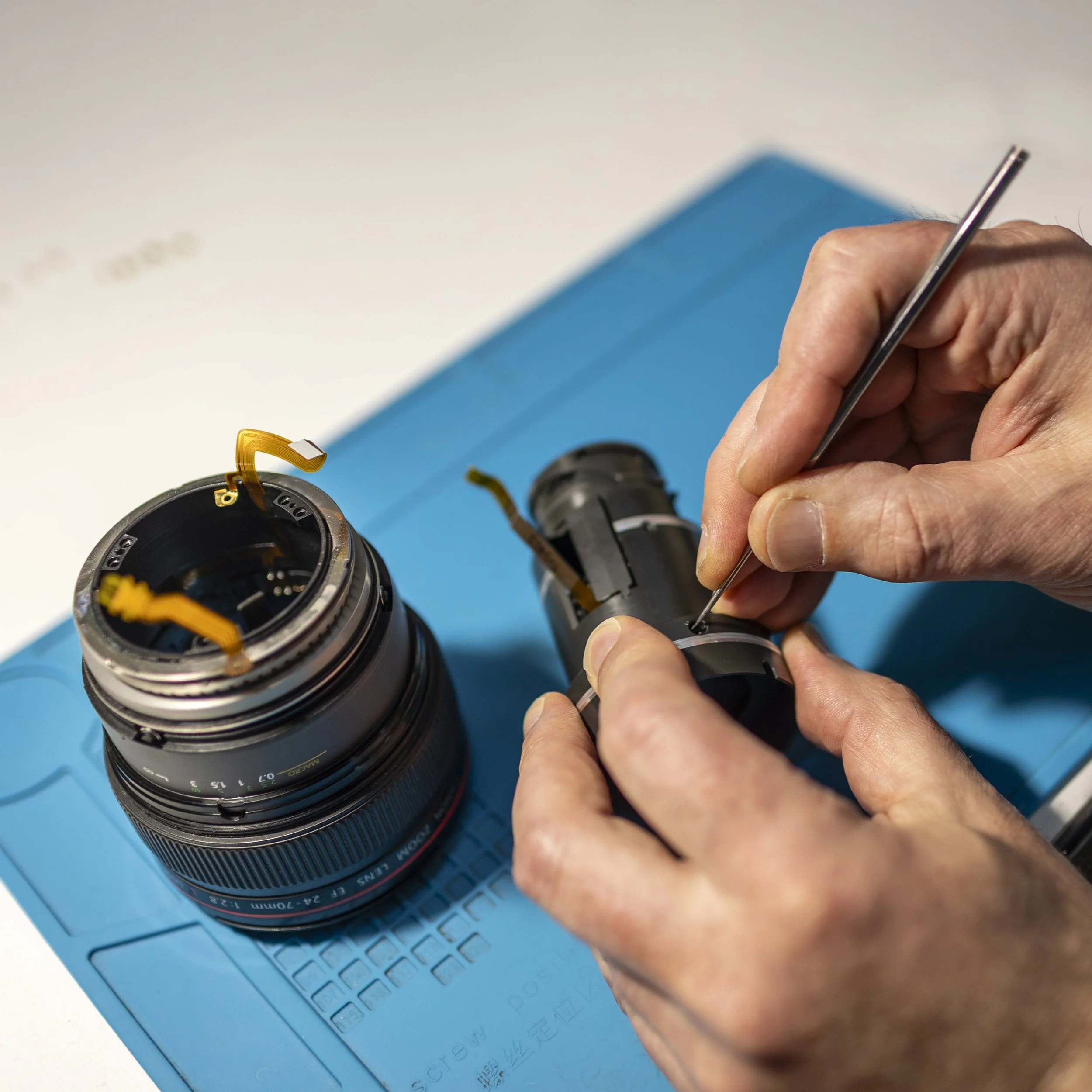
A lens reveals its complexity only when it is taken apart. In this case a Canon 24-70mm EF. With patience and a steady hand, each component is carefully examined and adjusted — precision work where even the smallest detail can make the difference.
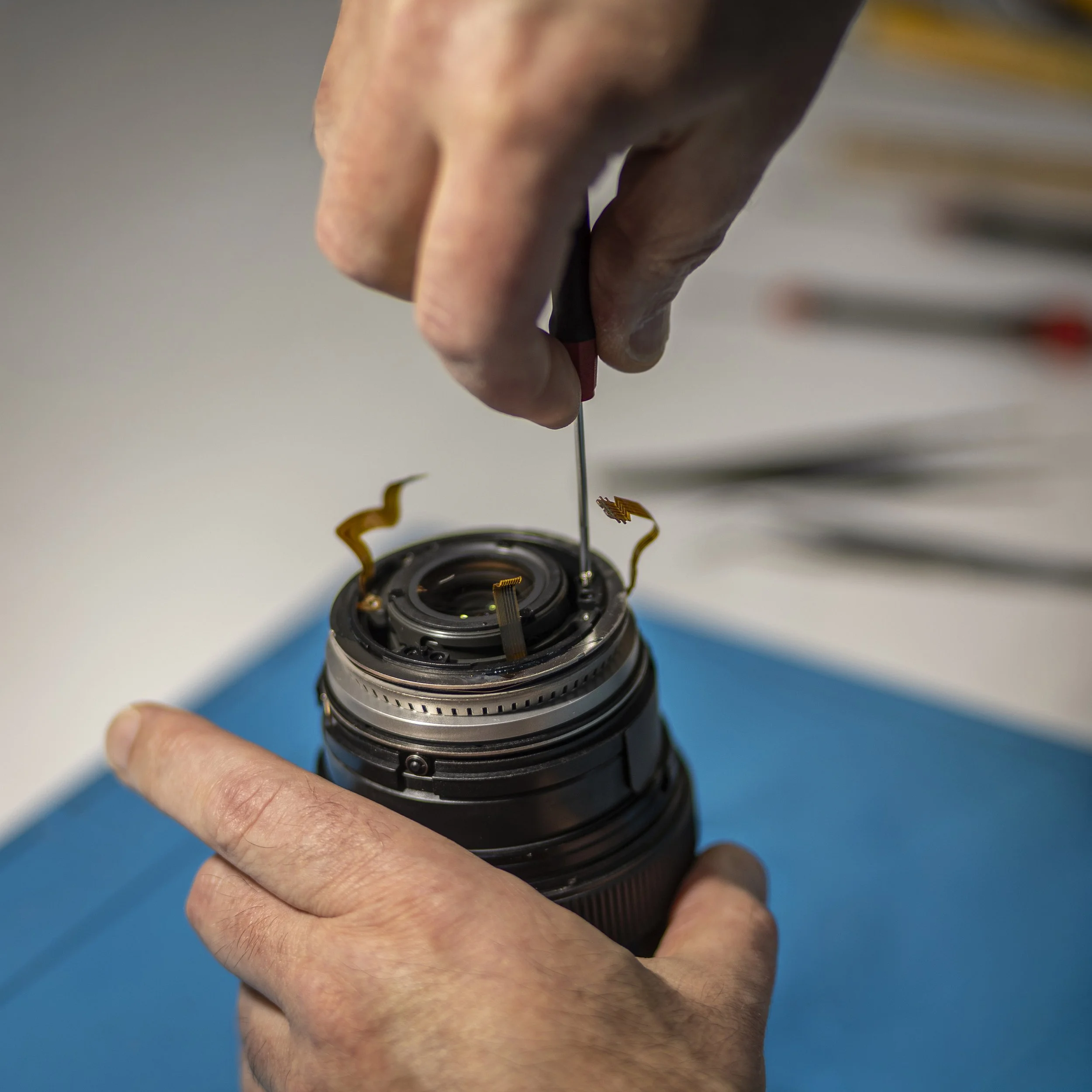
With steady hands and careful attention, the technician works deep inside the lens. Every tiny screw, contact and component demands precision — a craft where experience, patience and technical knowledge come together.
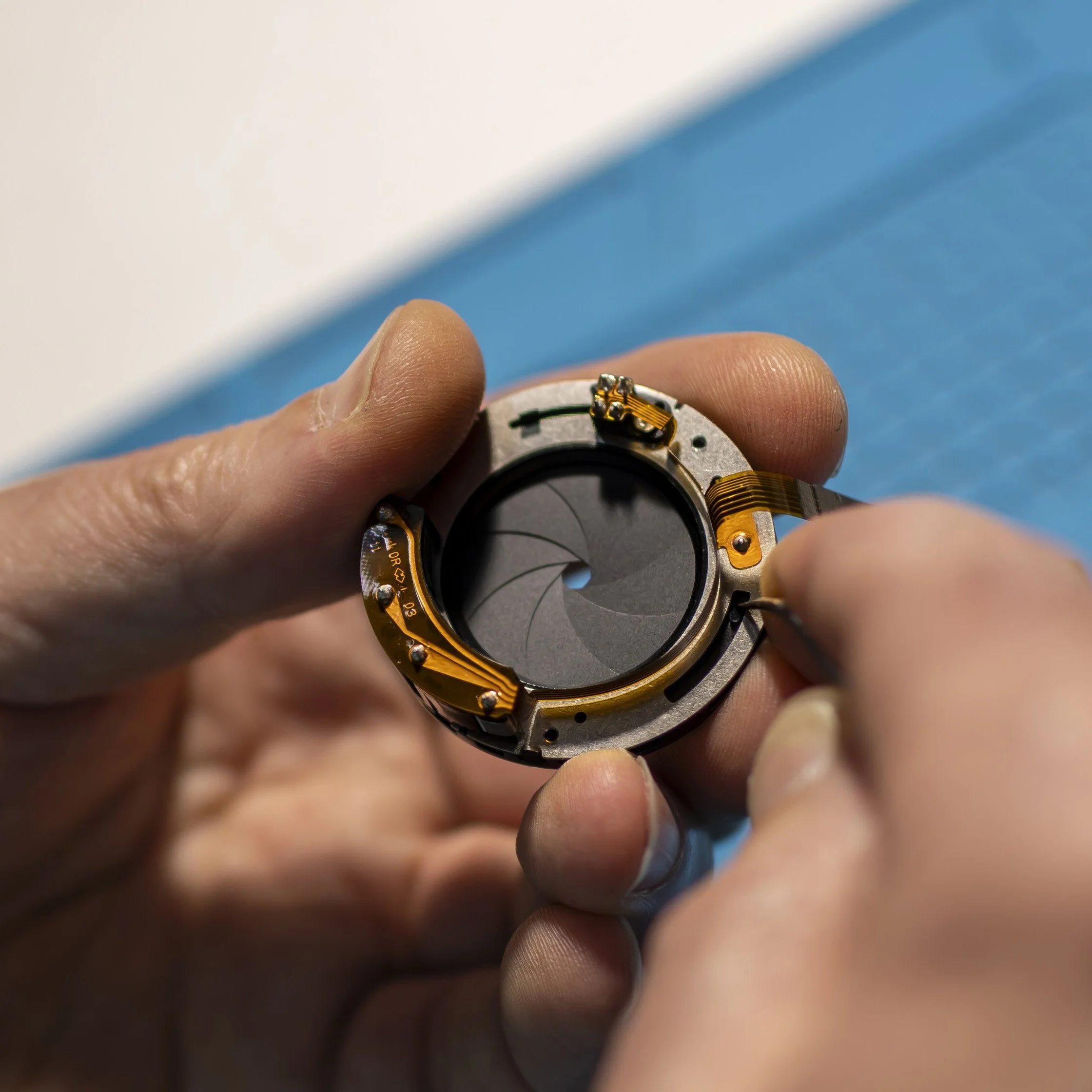
The aperture mechanism reveals just how delicate the engineering inside a lens can be. Carefully inspecting its tiny blades and connections requires a steady hand, a trained eye and an understanding of how precision mechanics and electronics work together.
Testing What the Eye Cannot See
Repairing a camera or lens is not only about taking it apart and replacing damaged components. An equally important part of the craft is testing, measuring and understanding how the equipment performs.
Using specialised optical testing equipment, the technician can examine details that are almost impossible to judge with the naked eye. Focus, alignment and optical performance are carefully checked while the camera records the test pattern. What may appear to be a small imperfection in everyday use can reveal valuable information about what is happening inside the camera or lens.
This stage brings together technology and human experience. The equipment provides measurements, but it is the technician who must interpret them, recognise irregularities and decide what needs to be adjusted.
Precision is not simply a matter of replacing parts — it is knowing how to measure, interpret and perfect the result.
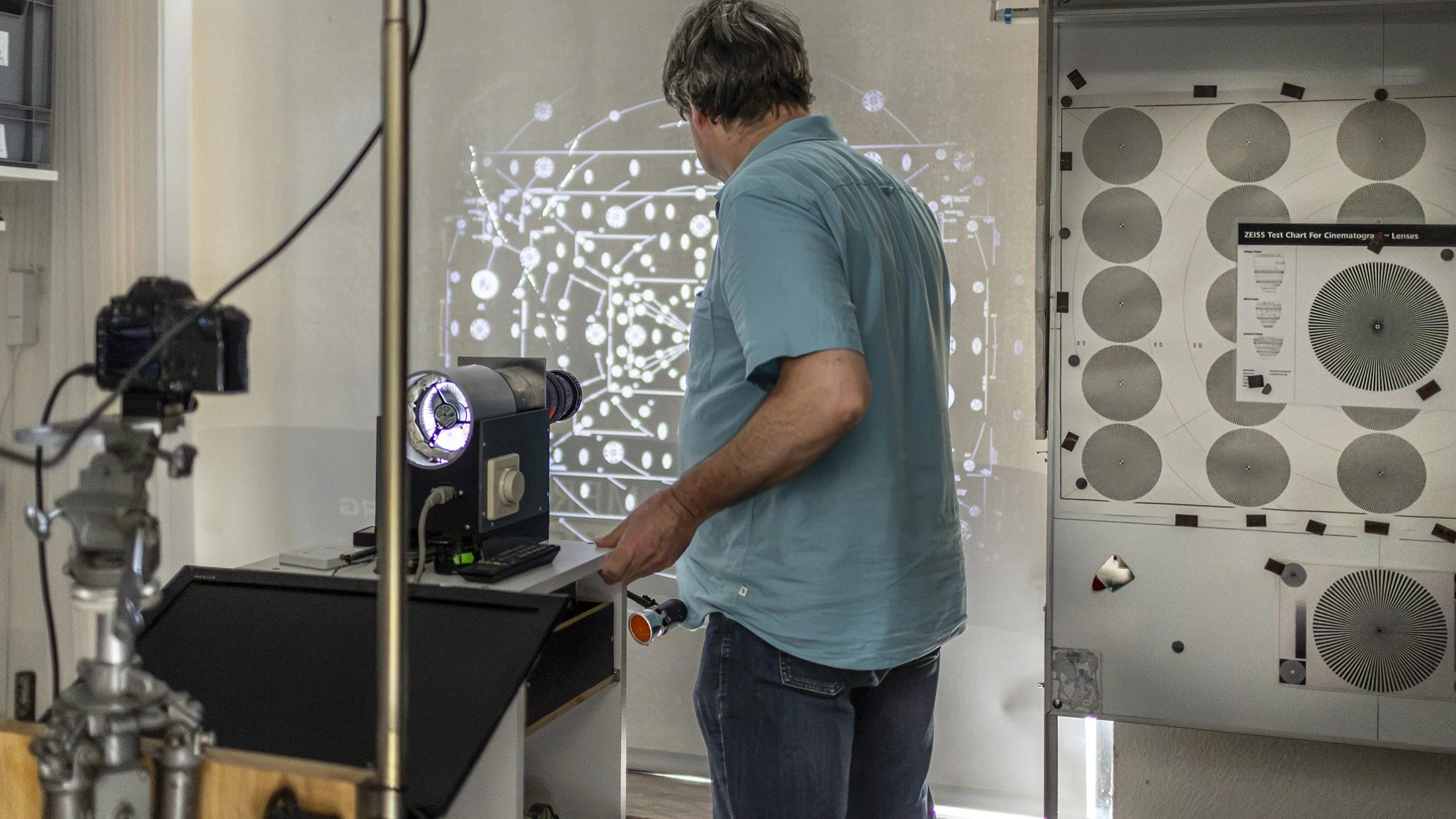
A man in a blue shirt working with scientific equipment in a laboratory, with a digital projection of a neural network or complex data visualization in the background.
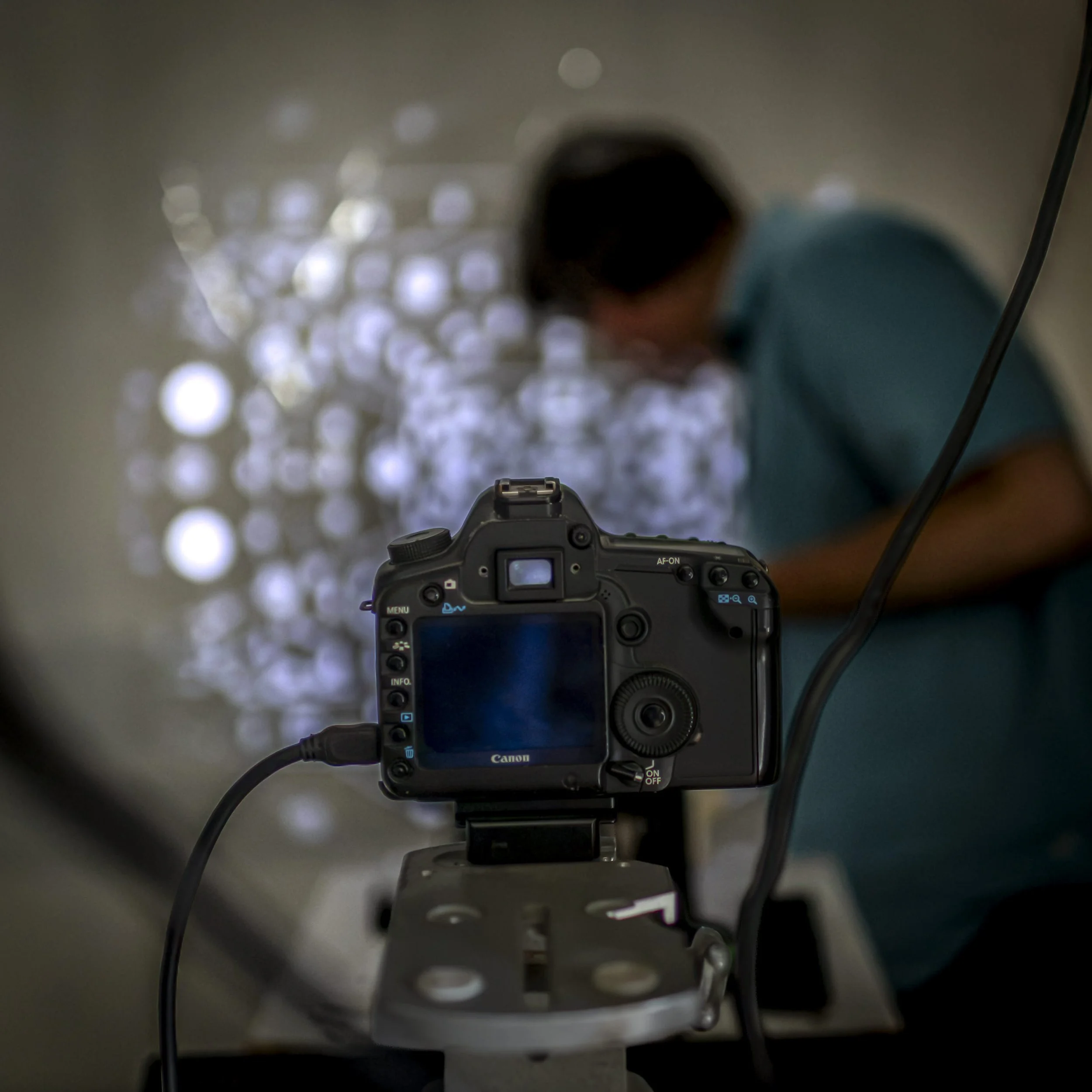
The view of the inside of a camera lens with the camera's LCD screen displaying the scene being captured, including a blurred person in front of a reflective surface with light spots.
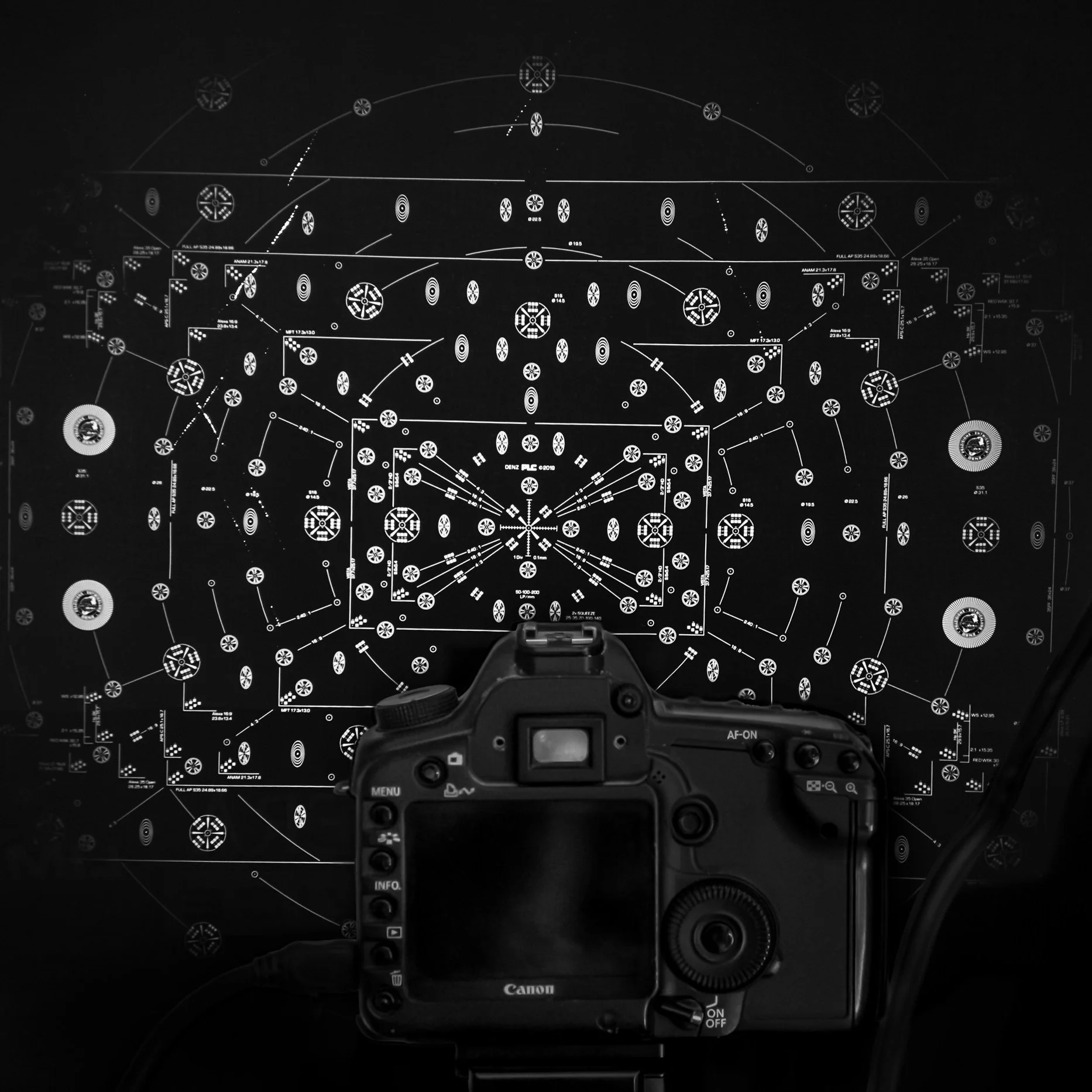
A computer monitor displaying a complex schematic diagram of technical symbols and connections, with a camera positioned in front capturing the image.
Where Precision Meets Craftsmanship
Behind every working camera lies a remarkably complex world of mechanics, electronics and countless tiny components. Repairing such equipment means entering that world piece by piece — carefully removing covers, tracing connections, inspecting mechanisms and working through layers that were never meant to be seen by the photographer.
These photographs reveal the hands-on nature of camera repair. Tweezers, screwdrivers and fingertips become precision instruments as delicate circuits, wires, switches and mechanical parts are examined and adjusted.
There is little room for error; every movement requires concentration and an understanding of how one small component affects the entire camera.
Yet this work is about more than technical knowledge. It is a craft built through experience — knowing how something should feel, recognising when something is not quite right and understanding where to look next.
What appears to us as a camera is, in the hands of the technician, an intricate puzzle waiting to be understood, repaired and brought back to life.
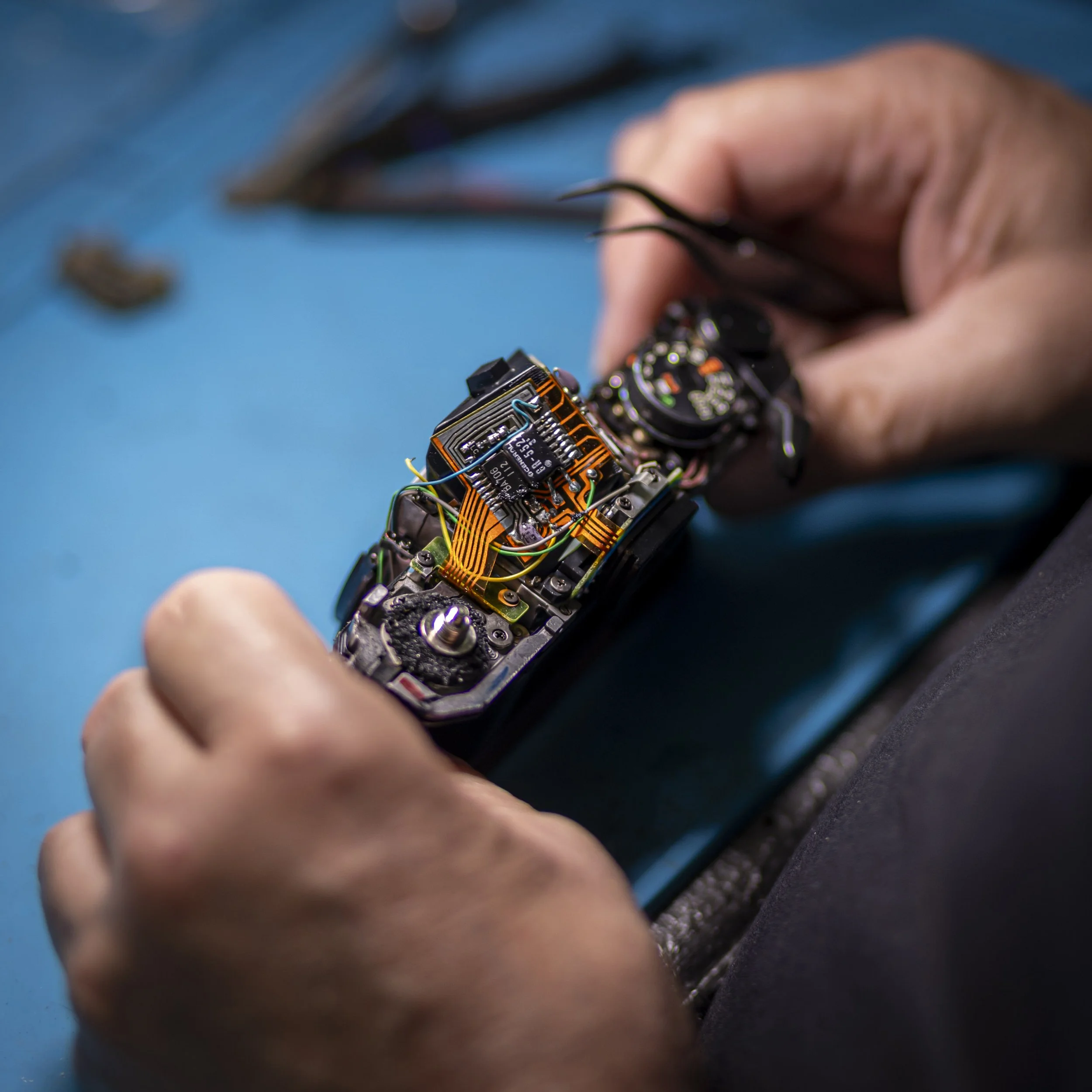
Close-up of a person's hand holding a small electronic circuit board with wires connected, with a blurred background.
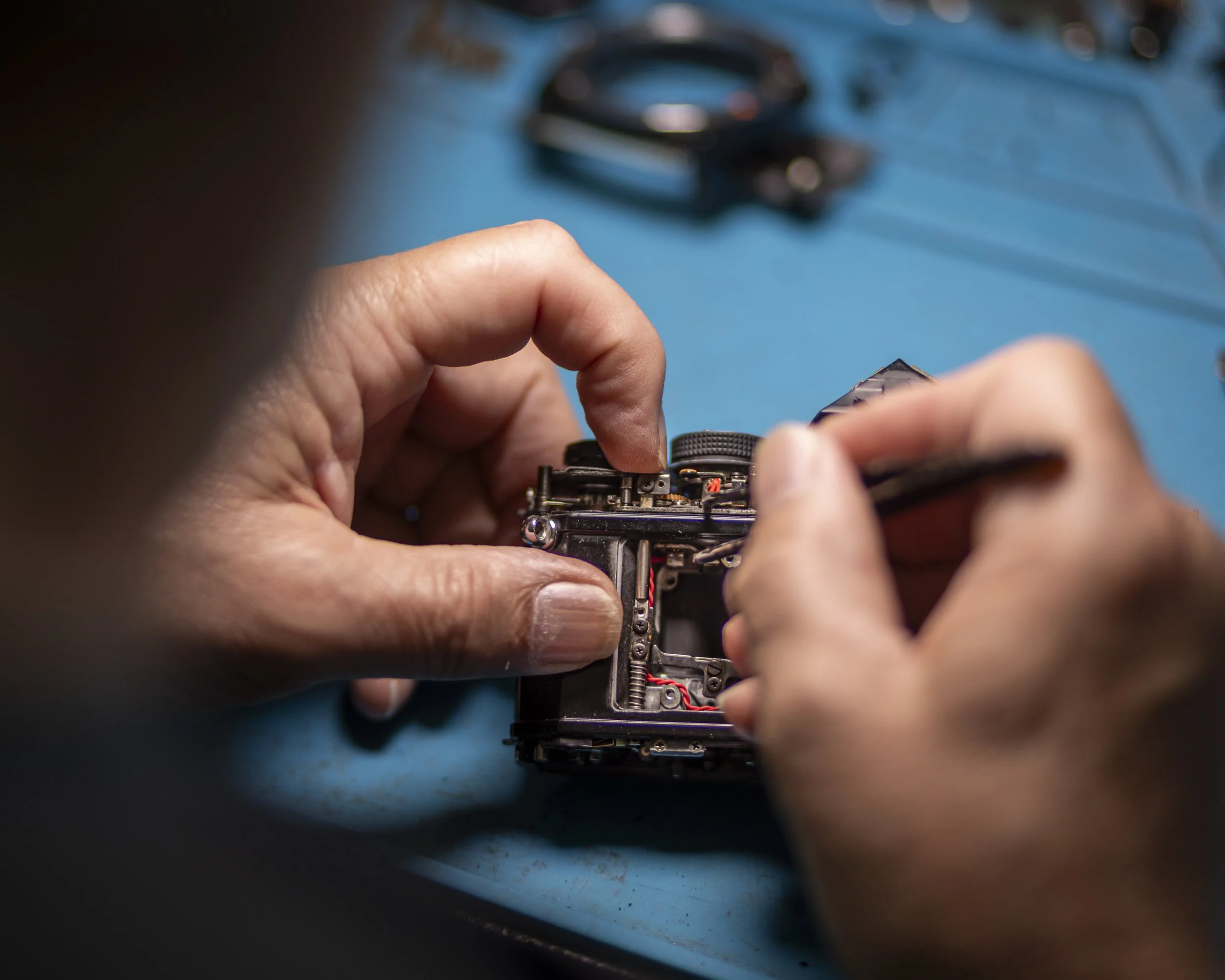
Close-up of hands working on an electronic device, possibly a small robot or circuit board, on a blue surface with blurred tools or parts in the background.
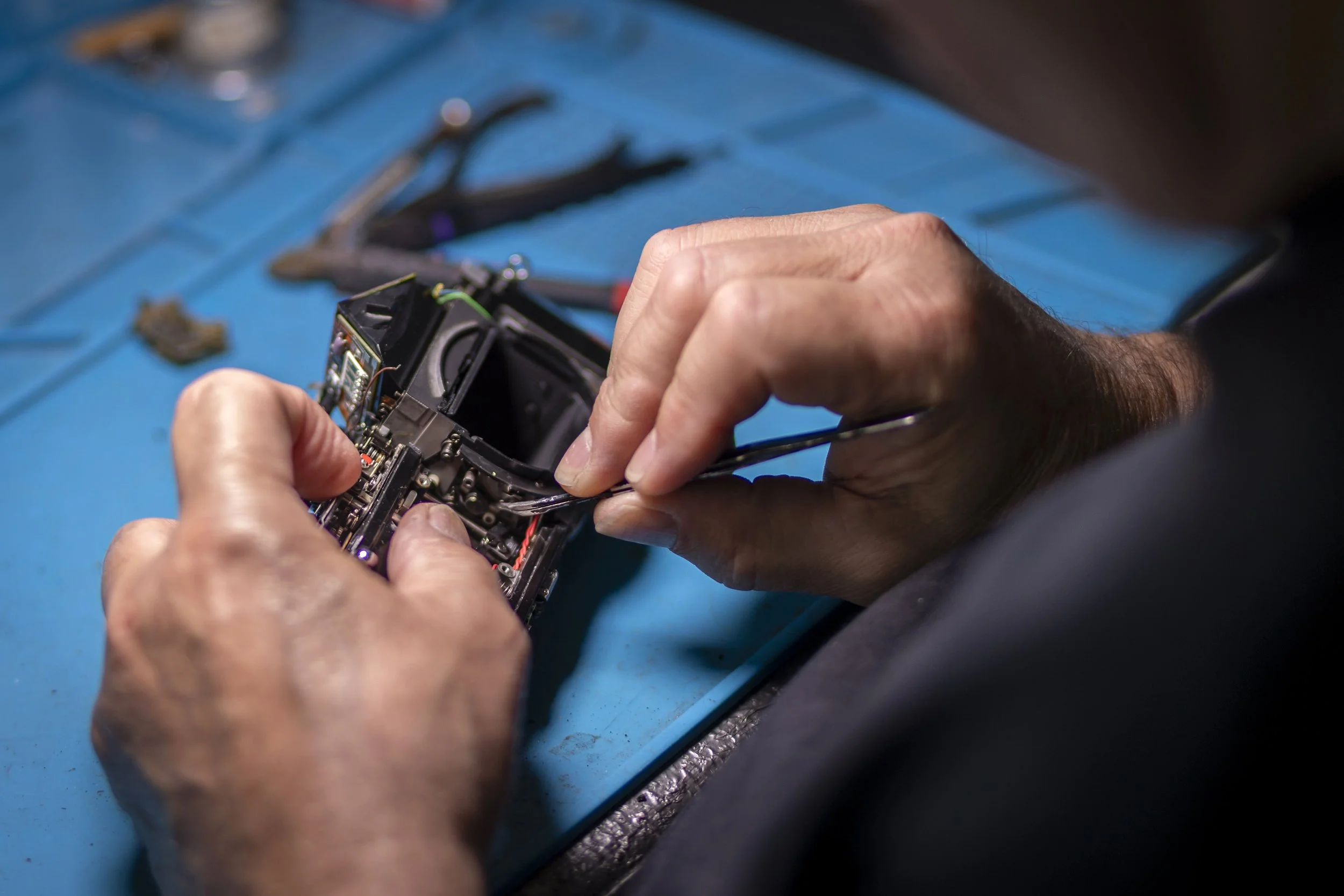
A person working on electronic device components on a blue work surface, with tools in the background.
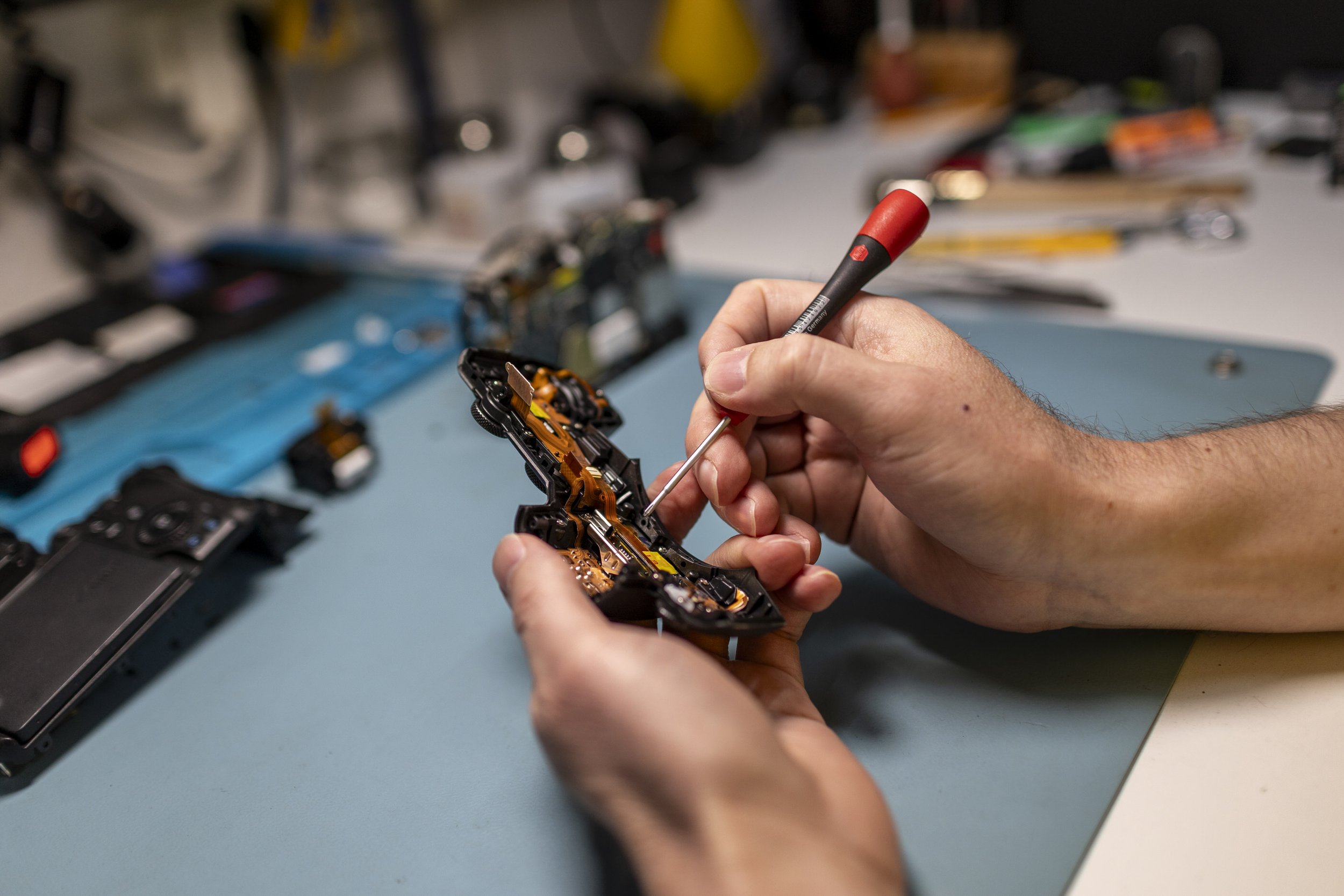
Person repairing an electronic device with a small screwdriver, with various tools and electronic components on a workbench in the background.
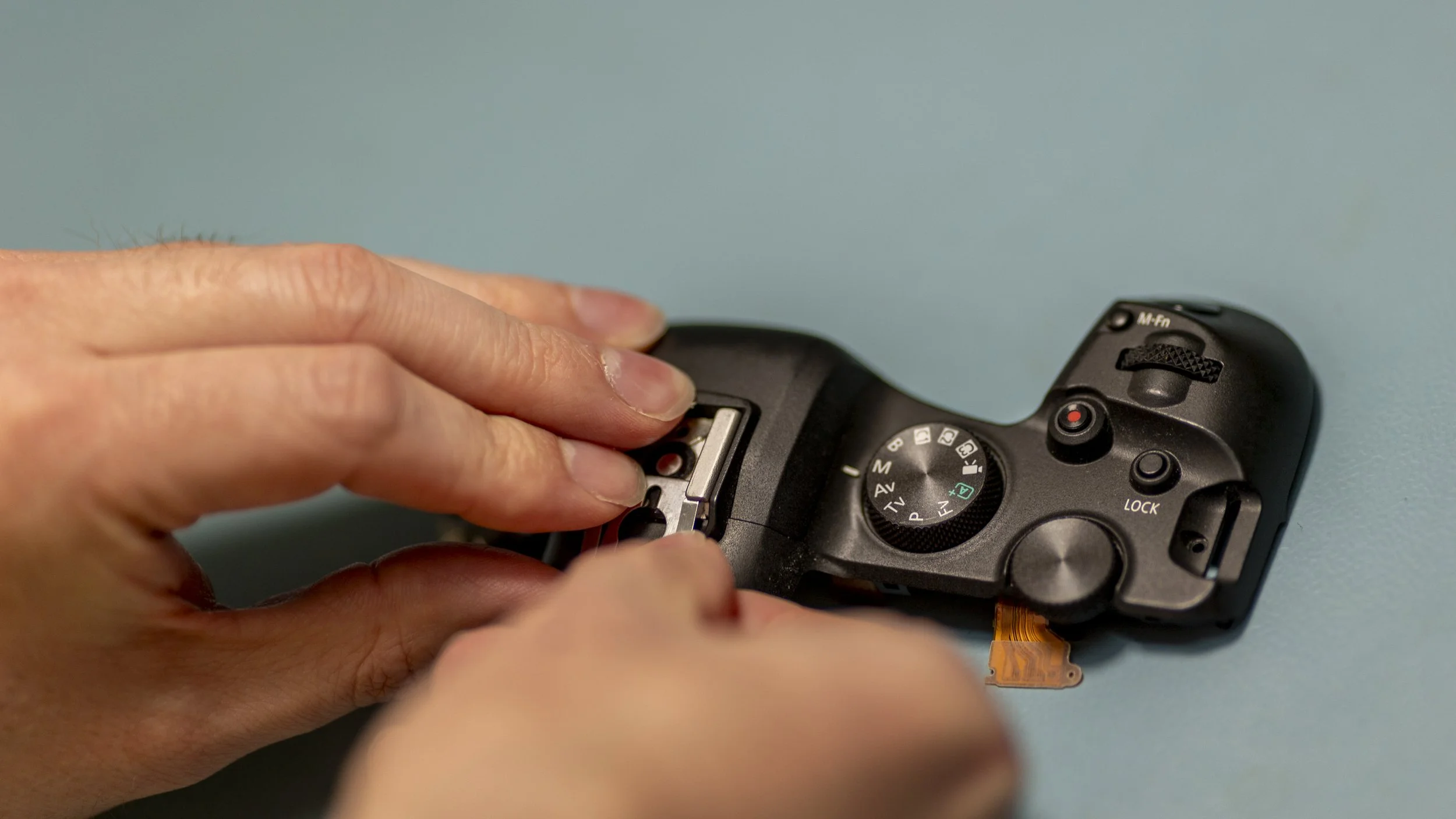
A person is holding a black digital camera and appears to be changing the battery or memory card compartment, with the camera placed on a flat surface against a light blue background.
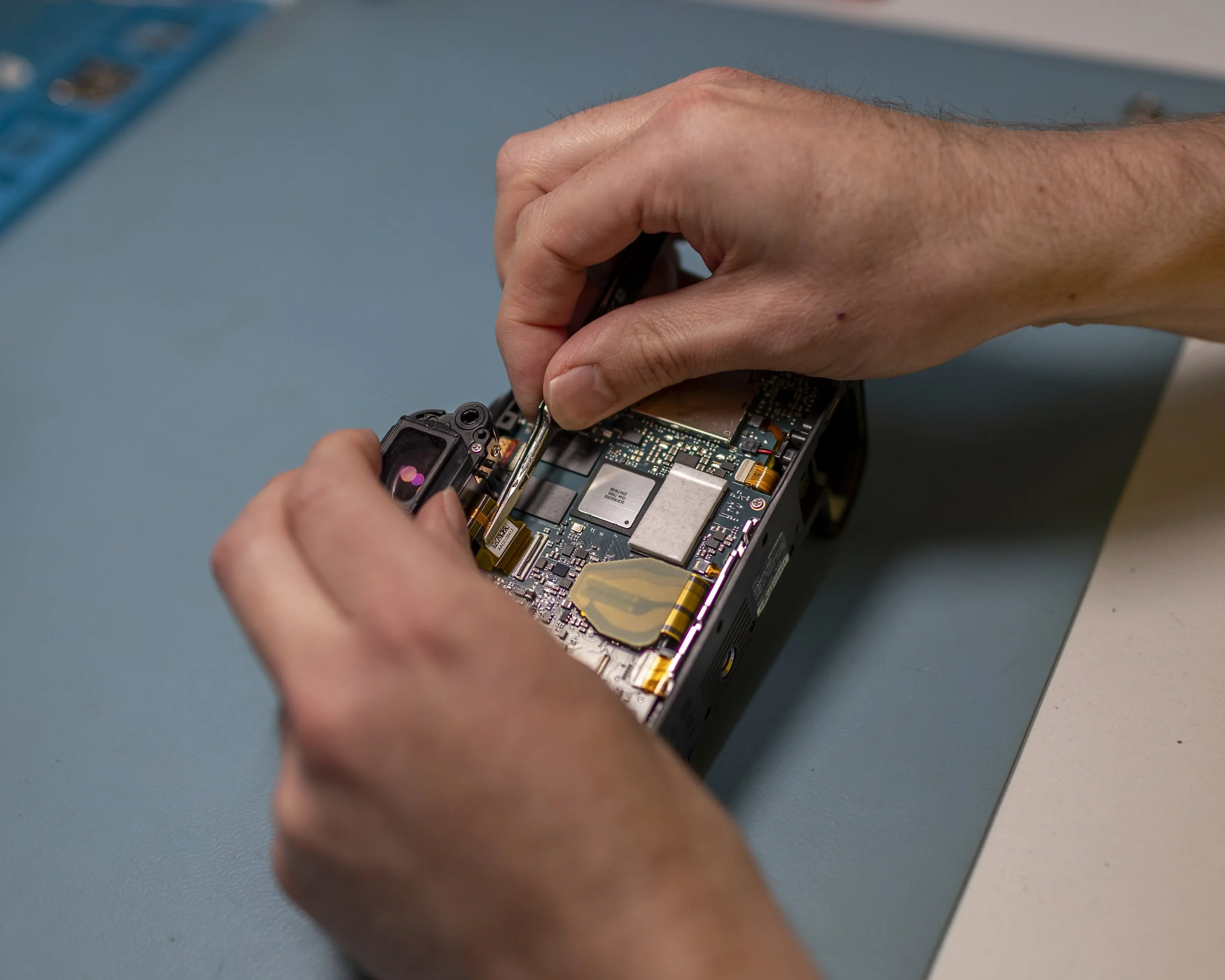
A person's hand working on the internal components of an electronic device, possibly a smartphone or small circuit board, with a blue background surface.
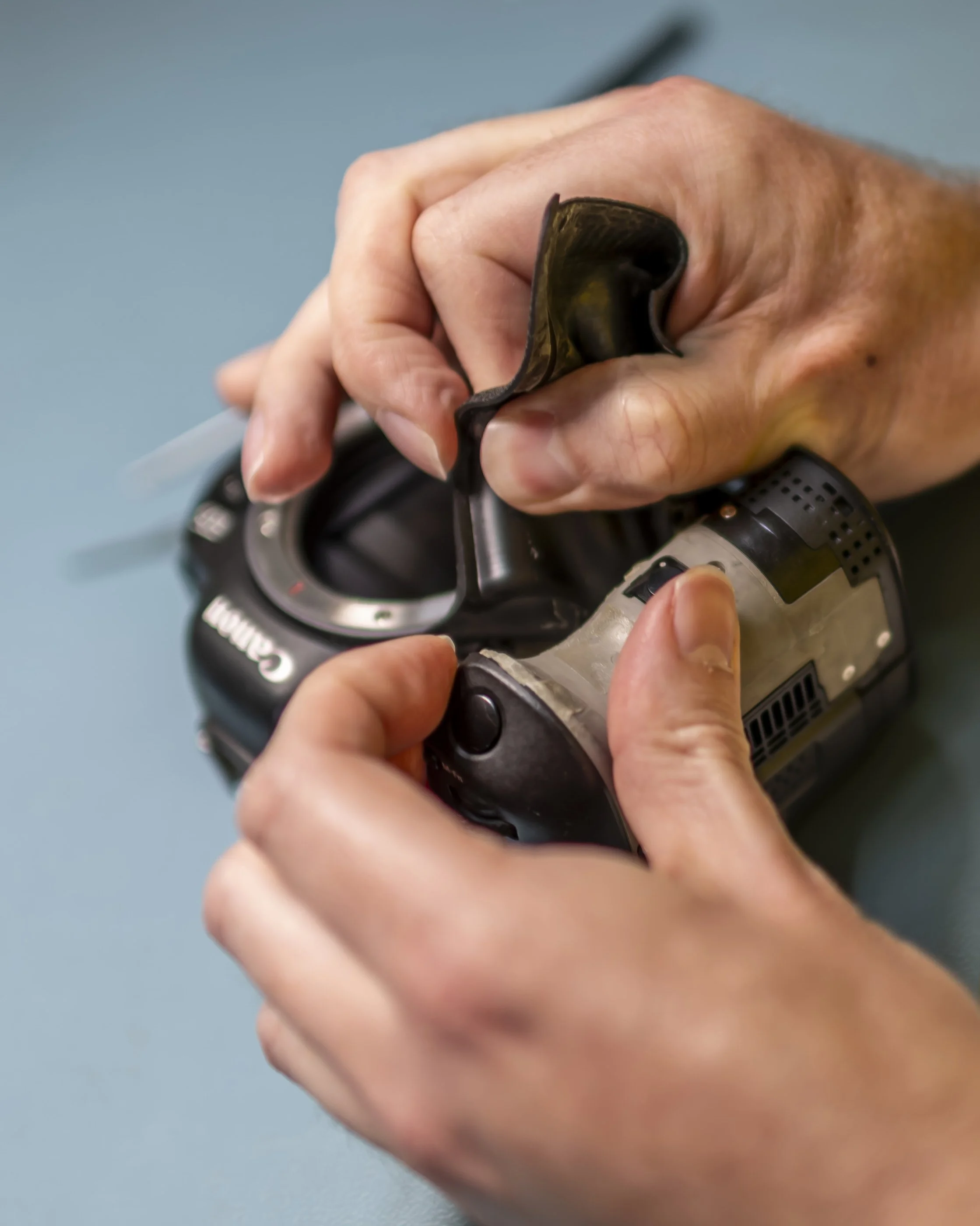
Close-up of a person's hand holding a drill, with a black rubber pad on their fingers, adjusting or repairing something. The background is a plain teal surface.
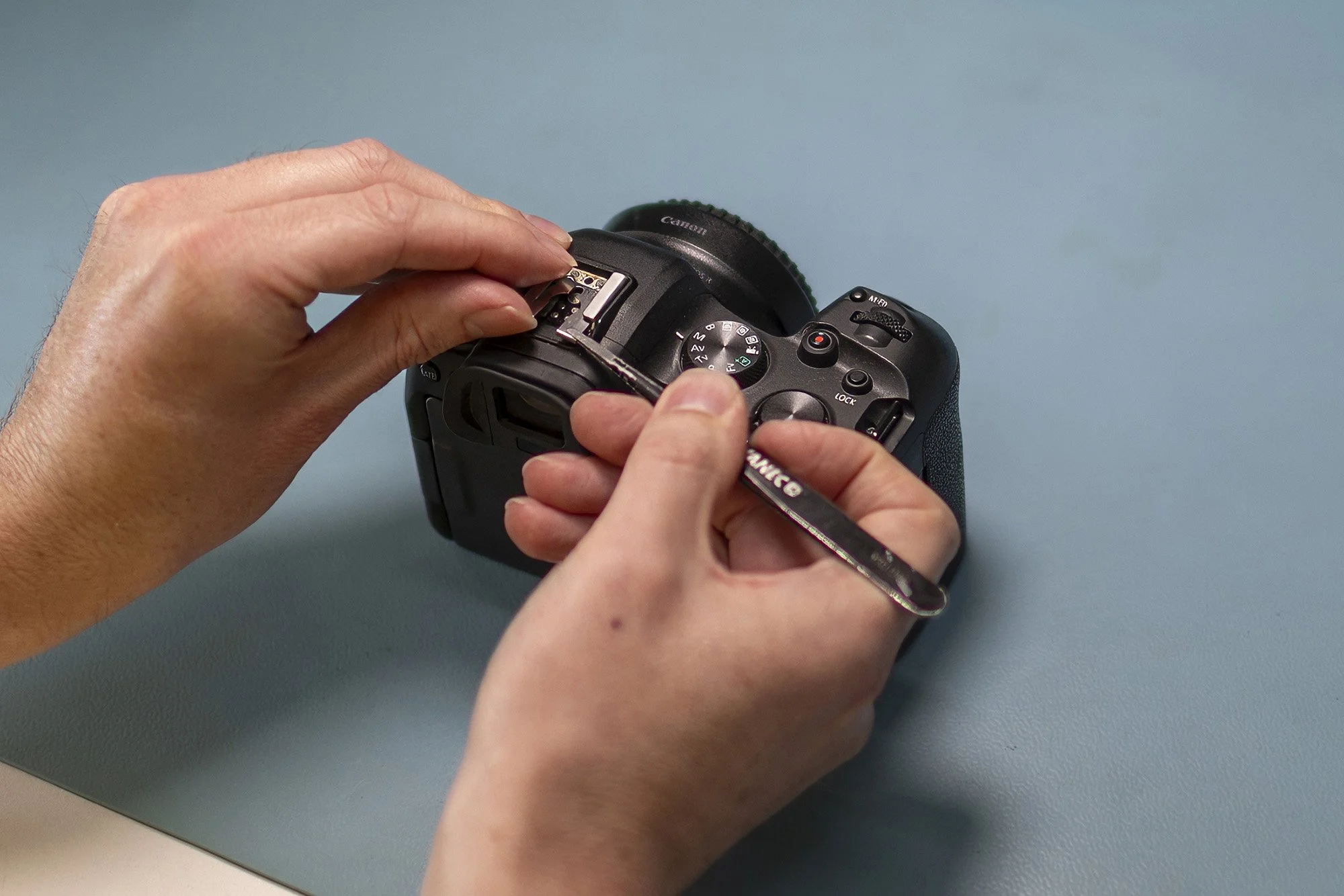
Hands holding a DSLR camera and a screwdriver, assembling or repairing the camera on a blue surface.