Why Personal Photography Projects Matter
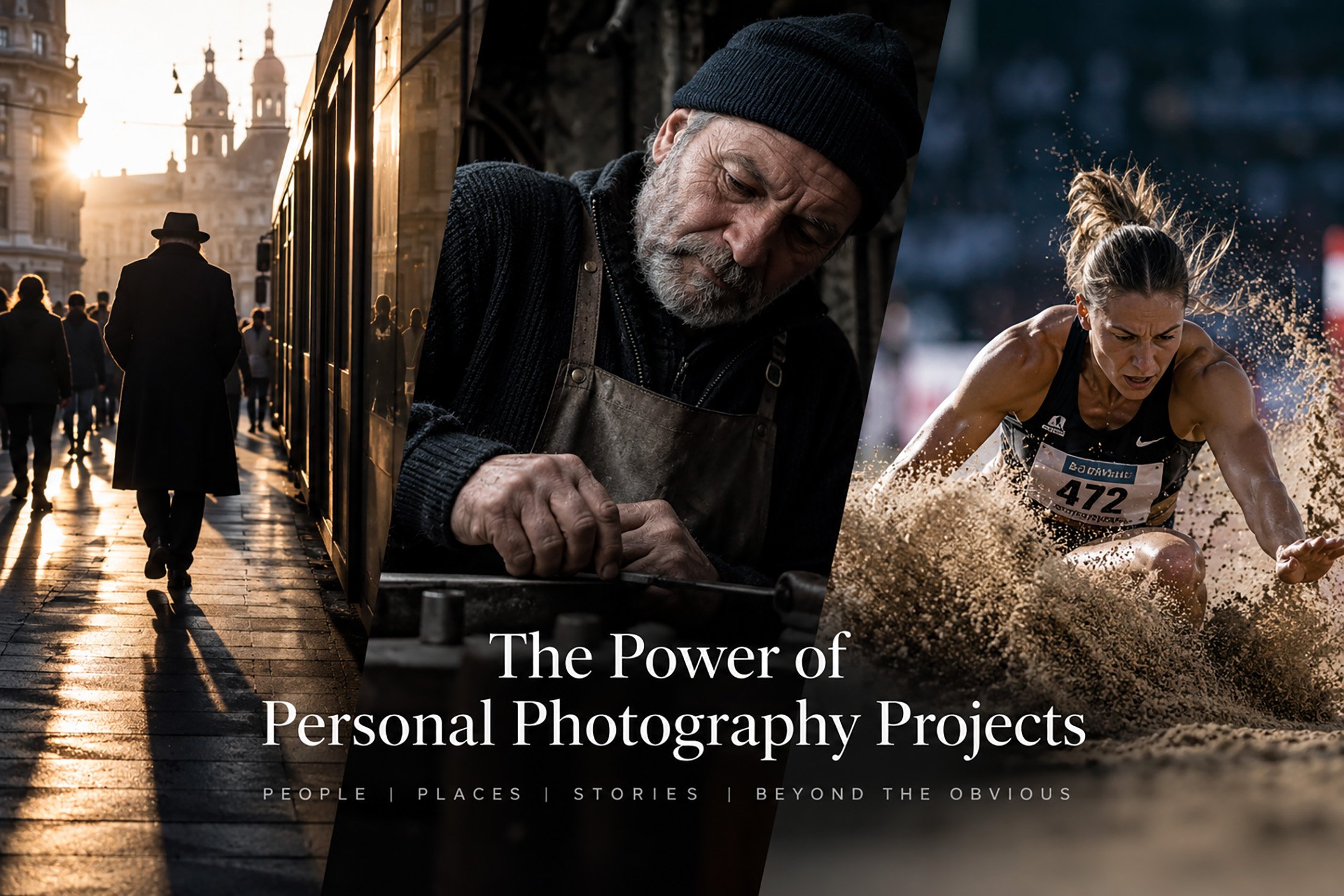
Photography becomes more interesting when you give yourself something to explore
It is easy to go out with a camera and simply photograph whatever catches your attention. There is absolutely nothing wrong with that. In fact, some of the most memorable photographs begin with nothing more than curiosity and the willingness to look. But at some point, photography can become more than collecting individual good images.
That is where personal photography projects become interesting. A project gives your photography direction. Instead of asking yourself “What shall I photograph today?”, you begin asking a much more interesting question: “What else can I discover about this subject?” That small change can completely transform the way you photograph.
For me, personal projects are not necessarily about producing a finished series as quickly as possible. They are about curiosity, observation and development. Some ideas may last a few weeks, while others can stay with you for years. The important thing is that they keep you looking.
From individual photographs to a body of work
A single photograph can be powerful. But a collection of photographs can tell a much larger story. This is particularly true in street and documentary photography. Imagine photographing people meeting in cafés, markets, parks and public squares. One photograph might simply show two people talking on a bench. But when you return to the subject repeatedly, patterns begin to appear.
How do people interact?
Where do strangers meet?
How do people use public space?
What happens between people when they think nobody is watching?
Suddenly you are no longer simply photographing people in public places. You are exploring human behaviour. That is the difference between photographing a subject and developing a project.
Projects teach you to look deeper
One of the greatest benefits of working on a photography project is that the obvious photographs quickly disappear. During your first visit to a location, you photograph what immediately attracts your attention. During your fifth visit, you begin noticing smaller things.
By your twentieth visit, you may be photographing relationships, gestures and details that you would never have noticed at the beginning. This is where photography becomes fascinating. You start looking beyond the surface.
In documentary photography, this might mean spending time with a person, community or place until you begin to understand the story behind what you see. In street photography, it might mean recognising recurring patterns in everyday life. And in sport photography, it might mean discovering that the story of sport extends far beyond the decisive moment of the competition itself.
Sport is much more than action
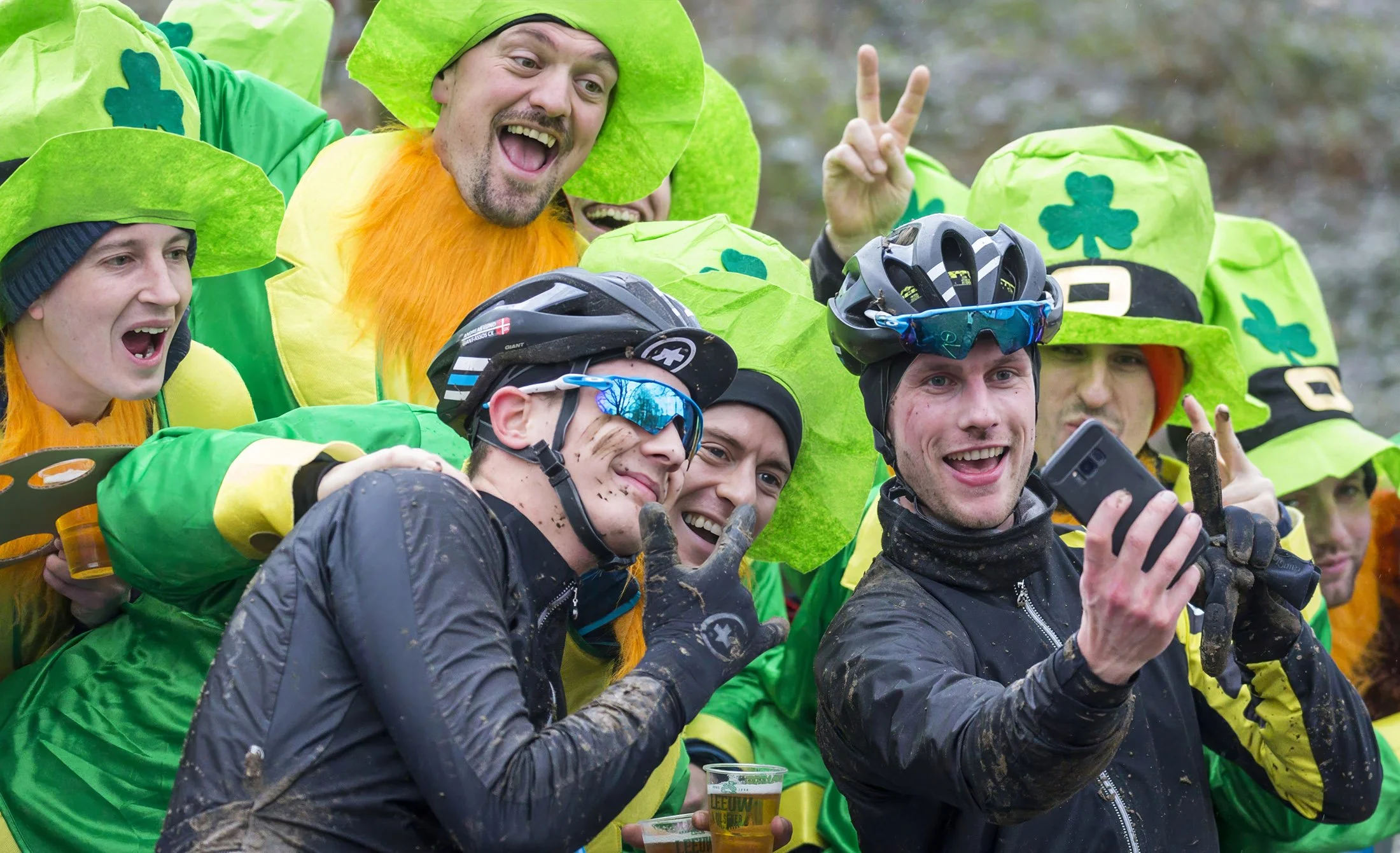
Fans of the Irish team meet with their heroes during the training for the World Championships Cyclocross.
Sport photography is a perfect example of how working in projects can change your way of seeing. It is tempting to concentrate entirely on peak action: the winning goal, the collision, the finish line, the decisive punch or the athlete frozen in mid-air. Those moments are important.
But they are only part of the story. Look around.
An athlete sitting silently before a competition.
A coach watching from the edge of the field.
Hands tightening shoelaces.
Officials preparing the venue.
Volunteers working behind the scenes.
Photographers waiting for the next moment.
Supporters celebrating — or staring silently after defeat.
The exhausted athlete after the finish.
These quieter photographs can sometimes tell us more about sport than the spectacular action photograph. A long-term project encourages you to photograph the entire world surrounding the competition: the arena, preparation, concentration, emotion, movement, spectators, volunteers, details and the stories behind the athletes. Together, those images create something much richer than a collection of action photographs.
They create a story.
Street photography becomes an exploration
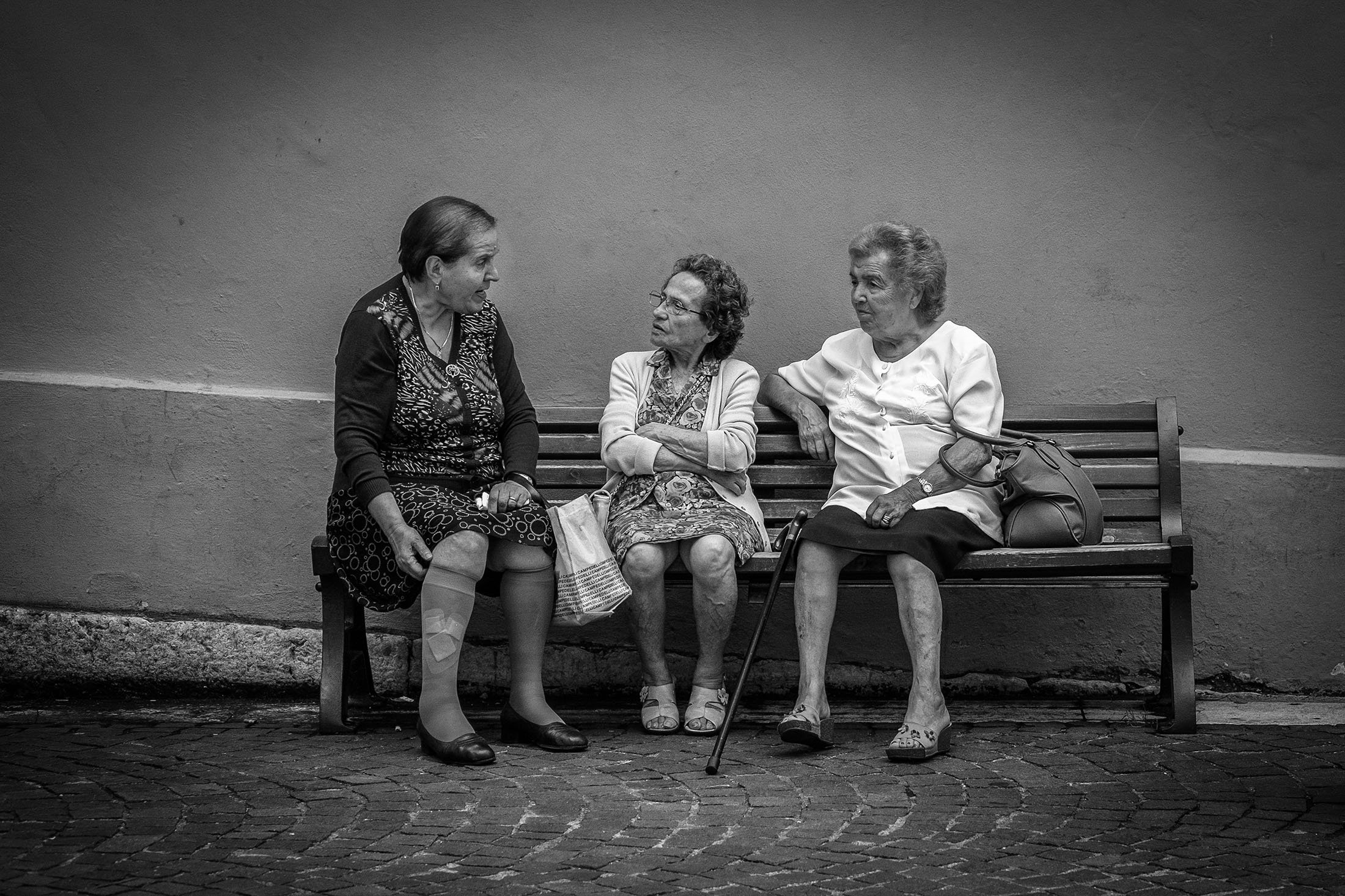
Sitting together on a bench in a small Italian village, these elderly ladies are catching up on the latest gossip. Nothing seems to escape their attention — in a village this small, news probably travels faster than the Wi-Fi.
Projects can be equally valuable in street photography. Walking through a city without a plan can be wonderfully liberating. But giving yourself a loose theme can sharpen your observation enormously. Perhaps you start looking for humour in everyday life. Or:
Relationships between strangers.
Reflections.
Gestures.
Visual coincidences.
People isolated within crowded places.
Connections between advertisements and passers-by.
Layers of activity within a single frame.
Suddenly the street becomes a kind of visual laboratory. You begin anticipating situations instead of simply reacting to them. You recognise backgrounds that might become interesting if the right person enters the frame. You notice colours, shapes and gestures that can connect completely unrelated elements. And perhaps most importantly, you learn to wait.
Sometimes the photograph does not yet exist. Everything is there except one element. Then somebody enters the frame. For a fraction of a second everything connects. And then there is the click of your camera.
Documentary photography asks you to stay
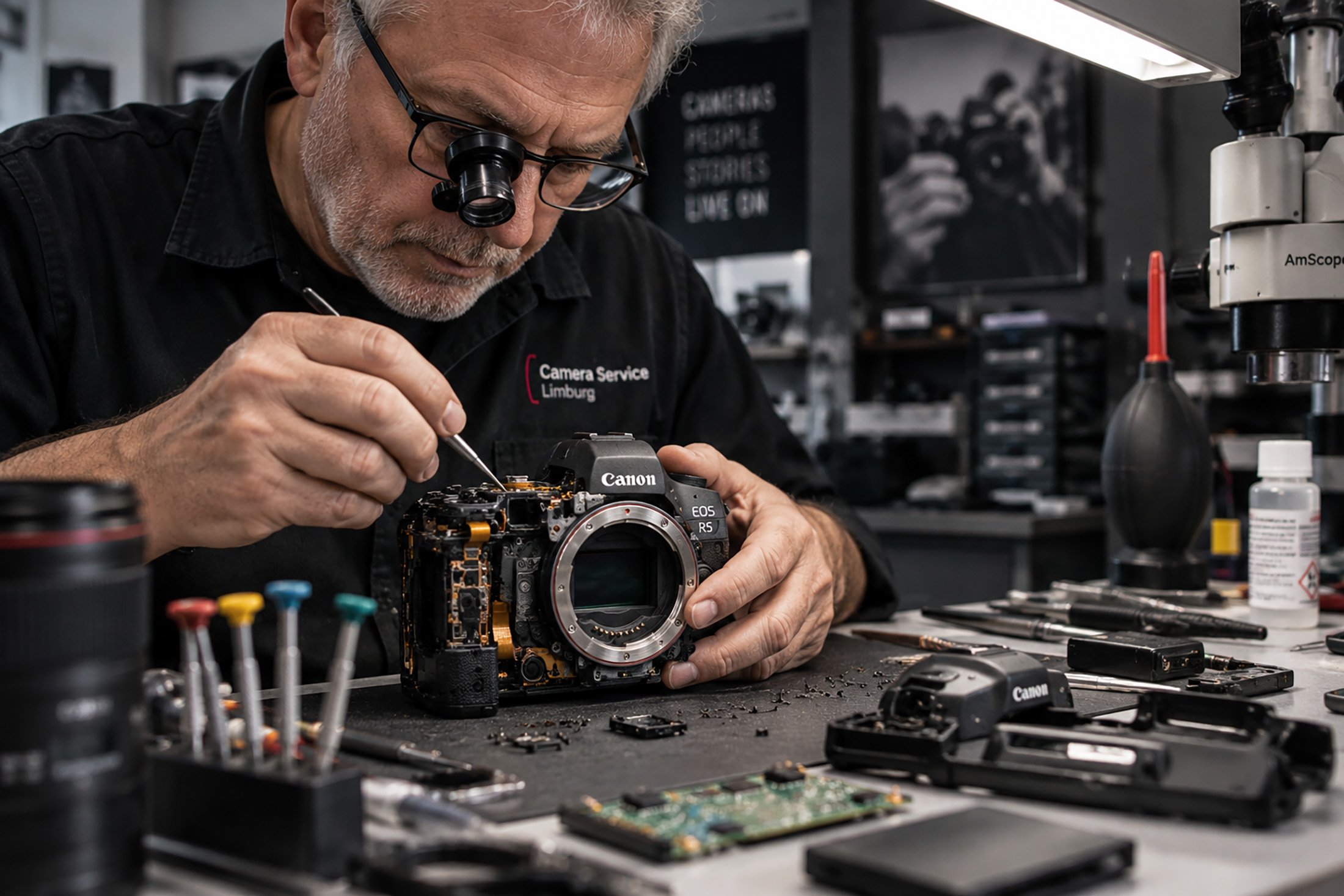
With a steady hand and an experienced eye, the camera technician carefully brings a camera back to life. Every tiny screw, delicate mechanism and electronic component demands patience, precision and years of experience. It is a craft that usually remains invisible to the photographer, hidden behind the cameras we rely on every day. Here, technology meets craftsmanship — and sometimes, all it takes is one pair of skilled hands to give a camera a second life.
Documentary photography often requires something different: time. Instead of arriving, photographing and leaving, you return. You talk to people. You listen. You observe routines. Gradually, your understanding of the subject changes.
Perhaps you are photographing an artisan working with leather. At first, you might concentrate on tools, hands and craftsmanship. But after spending more time there, other photographs begin to appear.
The worn workbench.
The concentration in someone's face.
A tool that has been used for thirty years.
A conversation with a customer.
A quiet moment between two activities.
The traces that years of work have left on a workshop.
These details give a project depth. The same applies when documenting neighbourhoods, communities, families, workplaces or people and the objects that carry important memories. The strongest documentary photographs often come after the obvious photographs have already been made.
A project helps you develop your own visual language
There is another important benefit. Working repeatedly on subjects that genuinely interest you gradually reveals how you see. You may discover that you are naturally attracted to humour.
Or movement.
Human interaction.
Quiet moments.
Strong graphic compositions.
Layers.
Emotion.
Small details.
Perhaps you repeatedly photograph people at the edge of an event rather than at its centre. That is valuable information. Because developing your photography is not only about learning new techniques. It is also about discovering what consistently attracts your attention. Over time, those choices become part of your photographic signature.
Projects create useful limitations
Creativity does not always benefit from unlimited freedom. Sometimes limitations make you more creative. A project gives you boundaries.
Photograph only within one neighbourhood.
Follow one sports club for an entire season.
Photograph strangers with an object that carries an important memory.
Document places where people meet.
Photograph only moments of visual coincidence.
Follow one craftsman from raw material to finished product.
Return to the same street corner every month.
These limitations force you to search harder. Instead of constantly searching for new subjects, you start discovering new possibilities within the same subject. That is often where originality begins.
You don't need to know the ending
A photography project does not need to be completely defined before you begin. In fact, some of the most interesting projects evolve while you are working on them.
Start with a question rather than a conclusion.
What happens here?
Who are these people?
Why does this place fascinate me?
What happens before and after the sporting moment everybody photographs?
How do people connect in public spaces?
Which everyday situations contain unexpected humour?
Then photograph. Look at your images. Return. Photograph again. After a while, the photographs themselves will begin telling you what the project is really about.
Editing becomes part of photography
Working on projects also teaches one of the most difficult photographic skills: editing. Not editing in Photoshop or Lightroom, but deciding which photographs actually belong together. You may have fifty individually strong photographs, yet only fifteen strengthen the story.
That forces you to ask difficult questions.
Does this photograph add something?
Have I already said this?
What is missing?
Does the series need a quieter photograph here?
Do I need an establishing image?
A portrait?
A detail?
An unexpected moment?
A photograph that closes the story?
You gradually stop judging photographs only as individual images and begin thinking about rhythm, relationships and sequence.
Give the project a destination
A project becomes even more motivating when you imagine what it might eventually become.
Perhaps a small photo book.
A website gallery.
An exhibition.
A magazine story.
A printed portfolio.
A lecture.
Or simply a carefully edited series of twenty photographs.
The destination does not have to be ambitious. But knowing that the photographs will eventually have to work together encourages you to photograph more deliberately. You are no longer collecting images. You are building something.
Start close to home
A good photography project does not require travelling to the other side of the world. Often the most interesting subjects are surprisingly close.
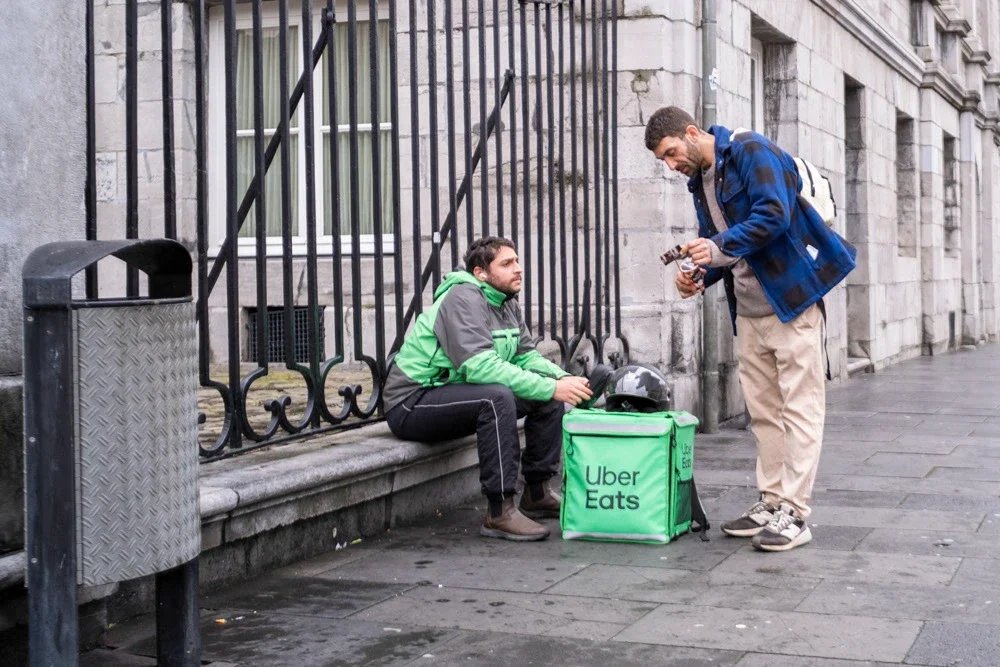
Everyday stories are often waiting just around the corner. A brief pause between deliveries becomes a small moment of street life — ordinary, unplanned and worth noticing.
Your neighbourhood.
A local sports club.
A weekly market.
A café.
A craftsman.
A train station.
A community centre.
A park where the same people meet every afternoon.
A sporting event that returns every year.
A street you have walked hundreds of times.
Familiarity can actually become an advantage. Because when the novelty of a place disappears, you have to look harder. And looking harder is exactly what photography projects teach us to do.
Start close to home
You do not necessarily have to work on only one project. Having several projects running simultaneously can keep photography fresh. One might be documentary and develop slowly over several years. Another might involve street photography whenever you visit a city. A sports project might depend on particular competitions or seasons.
Some projects can be carefully planned. Others can remain loose collections of observations that gradually begin to form a coherent series. The important thing is that each project gives you a reason to keep exploring.
The camera is only the beginning
Photography projects ultimately change the question we ask ourselves.
Instead of:
“Where can I make a good photograph?”
we begin asking:
“What am I trying to discover?”
That question takes photography beyond cameras, lenses, shutter speeds and perfect exposures. It encourages us to observe more carefully, return to places, spend time with people, anticipate moments and become more critical about the photographs we make.
Whether you photograph the unpredictable theatre of the street, follow people and communities through documentary photography, or explore the emotion and energy surrounding sport, a personal project gives all those individual moments a larger purpose. And perhaps that is the greatest value of working in projects. They don't just give us something to photograph. They give us a reason to keep looking.